36 Ways to Make Your Flower Beds Look Finished and Fresh
Garden borders do more than tidy a bed; they frame plantings, add texture, and give a yard instant polish. I love how a simple edge, whether a neat band of brick, a strip of corten steel, or a row of potted succulents, turns a patch of soil into a styled room.
This roundup brings together 36 garden border edging ideas that look expensive but anyone can pull off, from budget-friendly finds to small projects that pack big style. Below are some of the best options for inspo, spanning classic masonry, modern metal, and playful DIY solutions that make a landscape feel finished.
My Top 36 Garden Border Edging Ideas
I’ve pulled together an extensive collection of ideas for you to take a look at below. If you see one you love, make sure you save it to Pinterest:
1) Matte Black
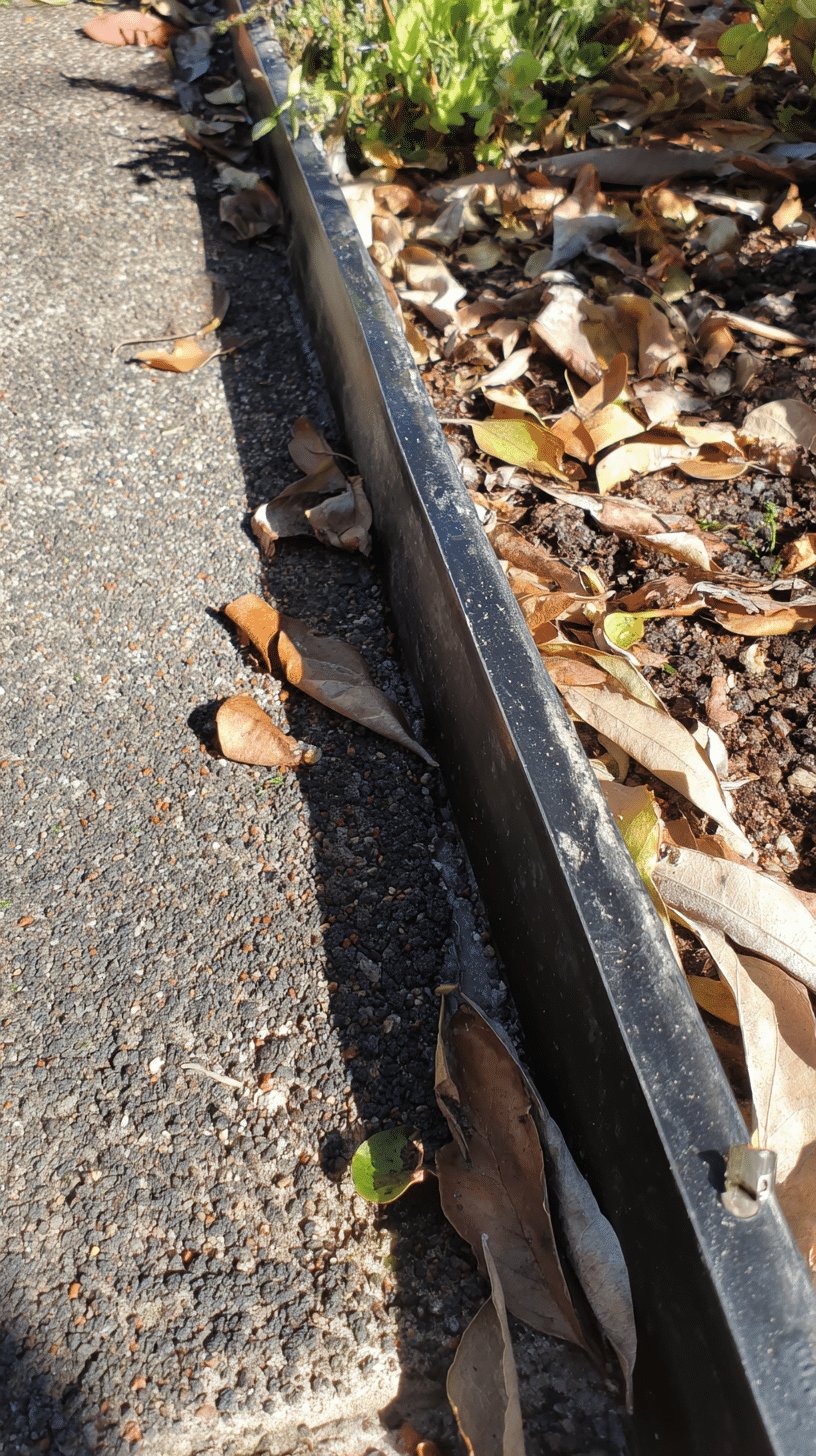
I love the crisp, no-nonsense line this black edging gives a bed. It reads modern but not precious, keeping mulch and soil where they belong while letting the plants be the show.
The low profile is a win if you like clean paths and tiny yards that feel tidy without trying too hard, and those little scuffs add a lived-in vibe that I secretly adore.
It’s especially great for gravel paths, raised veggie plots, or a contemporary cottage corner where you want structure without shouting.
Layer low groundcover or spilling perennials like sedum and thyme on the bed side, add a strip of pale gravel on the path side, and tuck a few terracotta pots or solar stake lights nearby for warmth. A quick sweep of leaves and an occasional re-stake keeps it looking sharp, and if you’re feeling fancy a little paint or a mossy edge can make it feel more intentional instead of just practical.
2) Textured Creamy Beige
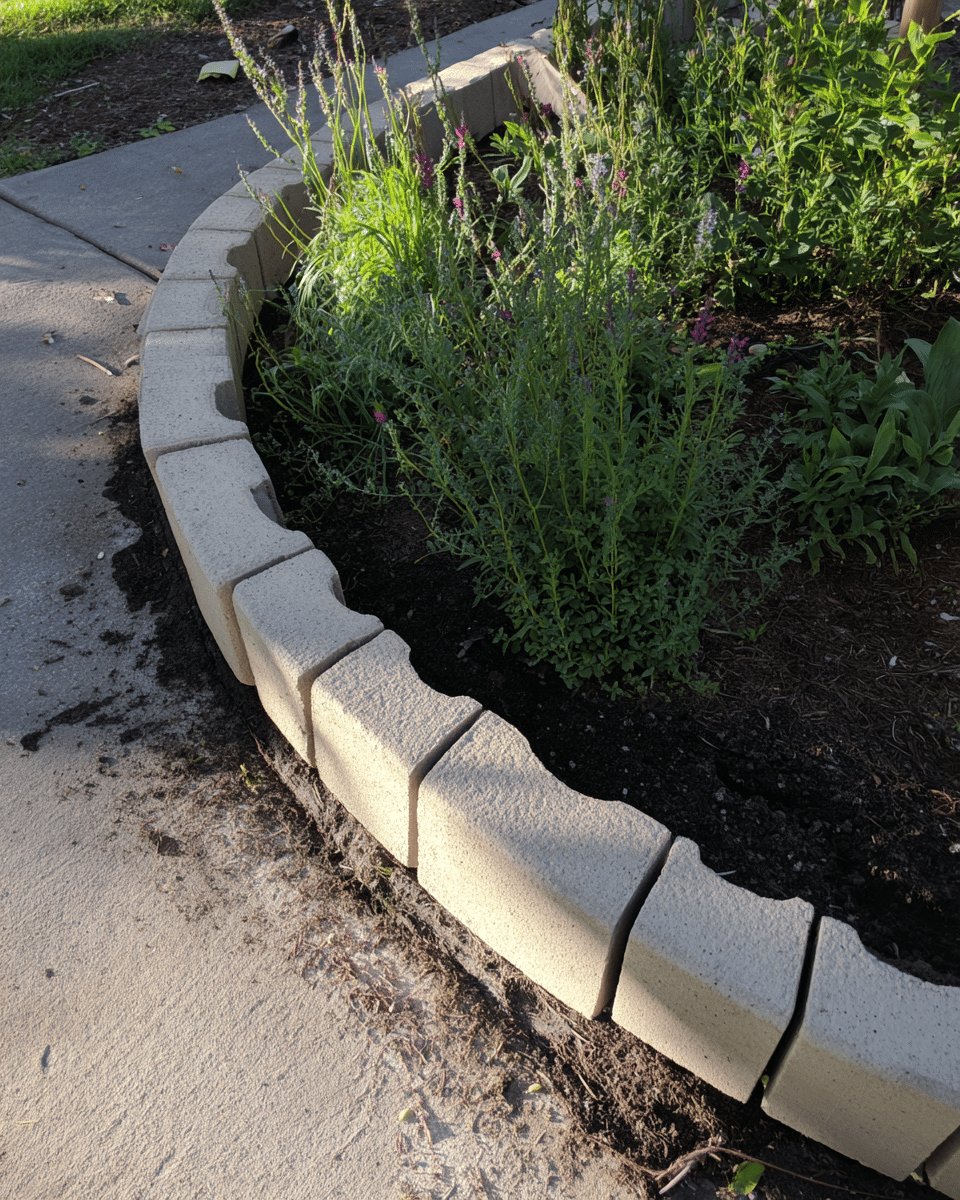
I love the clean, gentle curve and the scalloped tops of this concrete edging. The sandy, textured finish feels warm and approachable, so it frames beds without looking too precious.
I like how the low height gives plants a little stage, especially when perennials spill over the edge or ornamental grasses catch the light. The modular pieces create a nice rhythm that reads polished but still easygoing.
Tuck low groundcovers or thyme into the joints, plant taller blooms behind for depth, and lay a fresh layer of dark mulch or pale gravel to make the blocks pop. Add a couple terracotta pots or a simple bench nearby and some soft solar lights to keep the curve feeling intentional and cozy, not fussy.
3) Weathered Charcoal Steel

I love the quiet, graphic line this slim dark edging gives the garden. I appreciate that it reads modern and tidy while the weathered marks keep it from feeling too precious.
It instantly defines the gravel path from the planting bed, holds the pebbles in place, and still lets plants gently spill over for that effortless, lived-in look.
I think this works best in contemporary, urban, or relaxed cottage gardens where clean lines meet soft planting. It might feel a bit harsh in a very romantic or wildly naturalistic scheme.
I’d style it with low groundcover like thyme or sedum to soften the base, tuck taller perennials just behind the edge, and add a rustic pot or simple bench as a warm counterpoint. Keep the gravel neat and sweep away leaves now and then so that crisp line keeps doing the heavy lifting.
4) Rustic Gray Stones
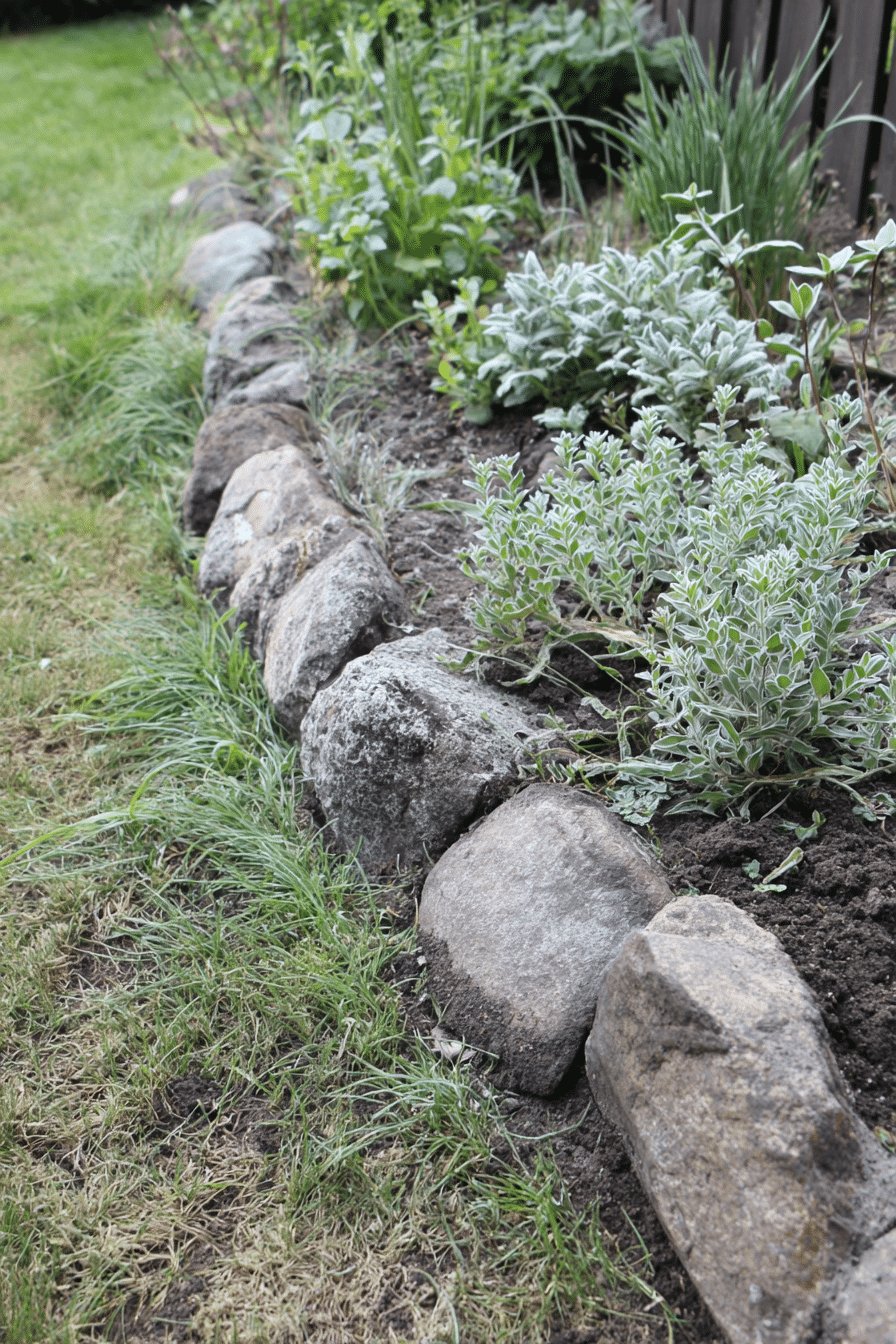
I love how this stone border feels completely unforced. The irregular rocks give the bed a handmade, lived-in vibe that immediately makes the planting look like it belongs.
The mix of rough texture and soft silvery foliage creates a lovely contrast, and the low profile keeps the view uninterrupted while still giving the garden a tidy edge.
It works especially well for cottagey borders, perennial mixes, and small vegetable or herb beds where you want structure without fuss.
Let plants spill over the stones—think thyme, sedum, lamb’s ear, and little grasses—add a gravel path or stepping stones for extra charm, and tuck a few terracotta pots or a weathered bench nearby. Keep it simple with a couple of solar stake lights and an occasional trim of the grass edge, and you’ve got an easy, cozy border that feels effortless and a little bit magical.
5) Brushed Steel
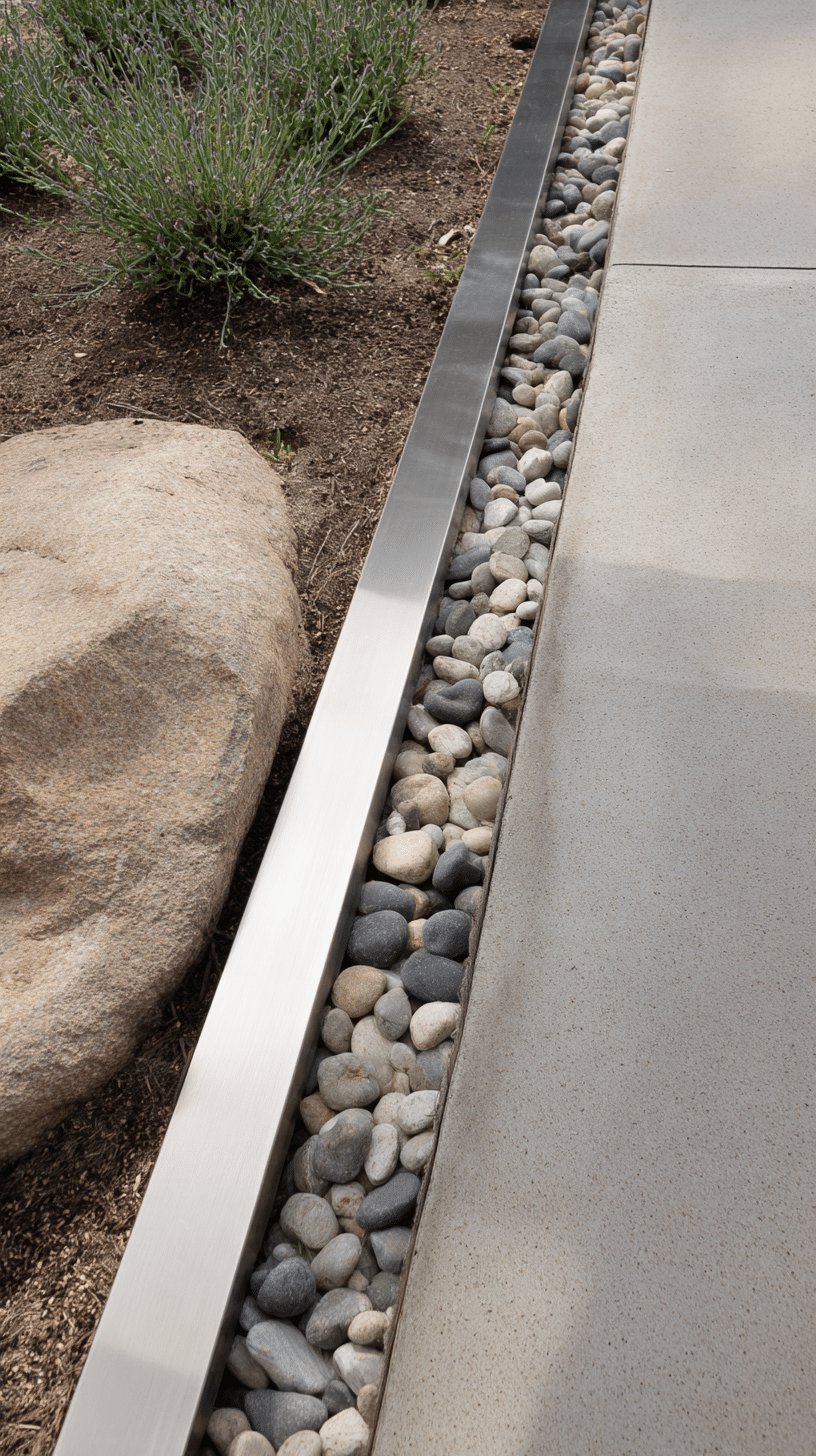
I love how the slim stainless steel edging reads clean and intentional without shouting. The metal edge gives big mirror energy that plays nicely off the soft river rocks and the warm concrete path, so the whole border feels modern but grounded.
It makes the planting area look curated and low maintenance, which I am here for. This approach works especially well in contemporary, coastal, or drought-tolerant gardens where crisp lines and textured stones are the vibe.
I wouldn’t pick this for a wildflower meadow or an overgrown cottage border, since the finish can feel too sharp for wildly romantic planting.
To soften it, I’d layer in architectural plants like lavender, ornamental grasses, and small succulents, add a few rounded boulders for contrast, and toss in a matte bench or warm-toned pots to keep things cozy. Low solar lights or simple uplighting will warm the metal at night and make the whole edge read intentional, not clinical.
6) Rustic Weathered Brown Wood
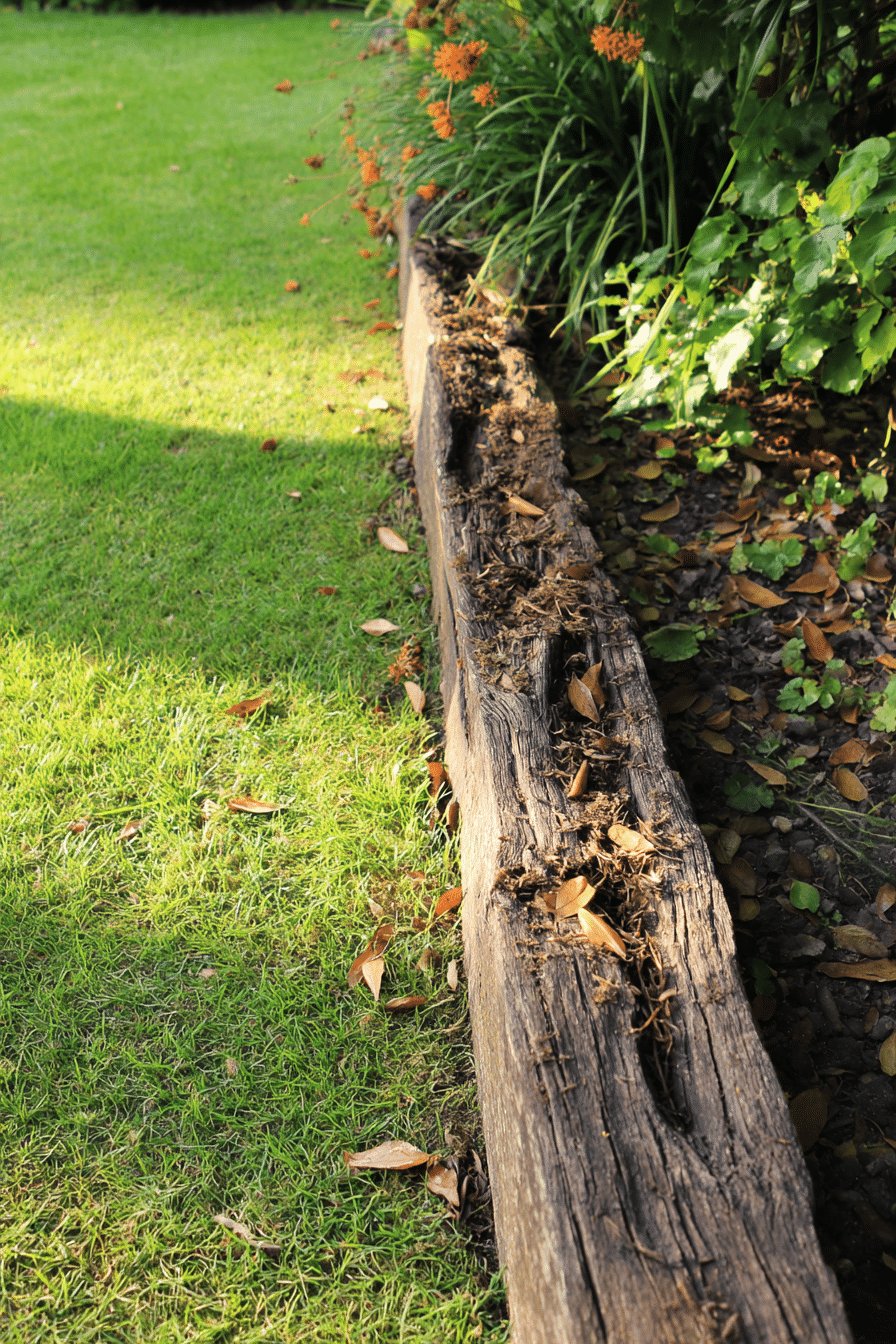
I love the weathered timber edging here — those cracked grooves and soft gray patina give the garden instant character while quietly keeping the bed contained.
The low, chunky profile reads relaxed not fussed, so it looks right at home with cottagey perennials, sedges, and trailing thyme that spill over gently. It’s perfect for shady borders, native plantings, or any spot where you want a comfy, lived-in vibe; add a gravel path, a rustic bench, or a few terracotta pots and the whole corner feels like it was meant to be.
If you’re after a super modern or formal look, this won’t be your flex, and it can struggle in really wet spots since wood likes to rot.
To keep it looking good, tuck in groundcovers to hide gaps, add fresh mulch or pea gravel for contrast, or slip in a thin liner to slow decay. Finish with low solar lights or a cluster of simple planters and let the plants soften the rough edges — effortless charm, zero stuffiness.
7) Rustic Terracotta
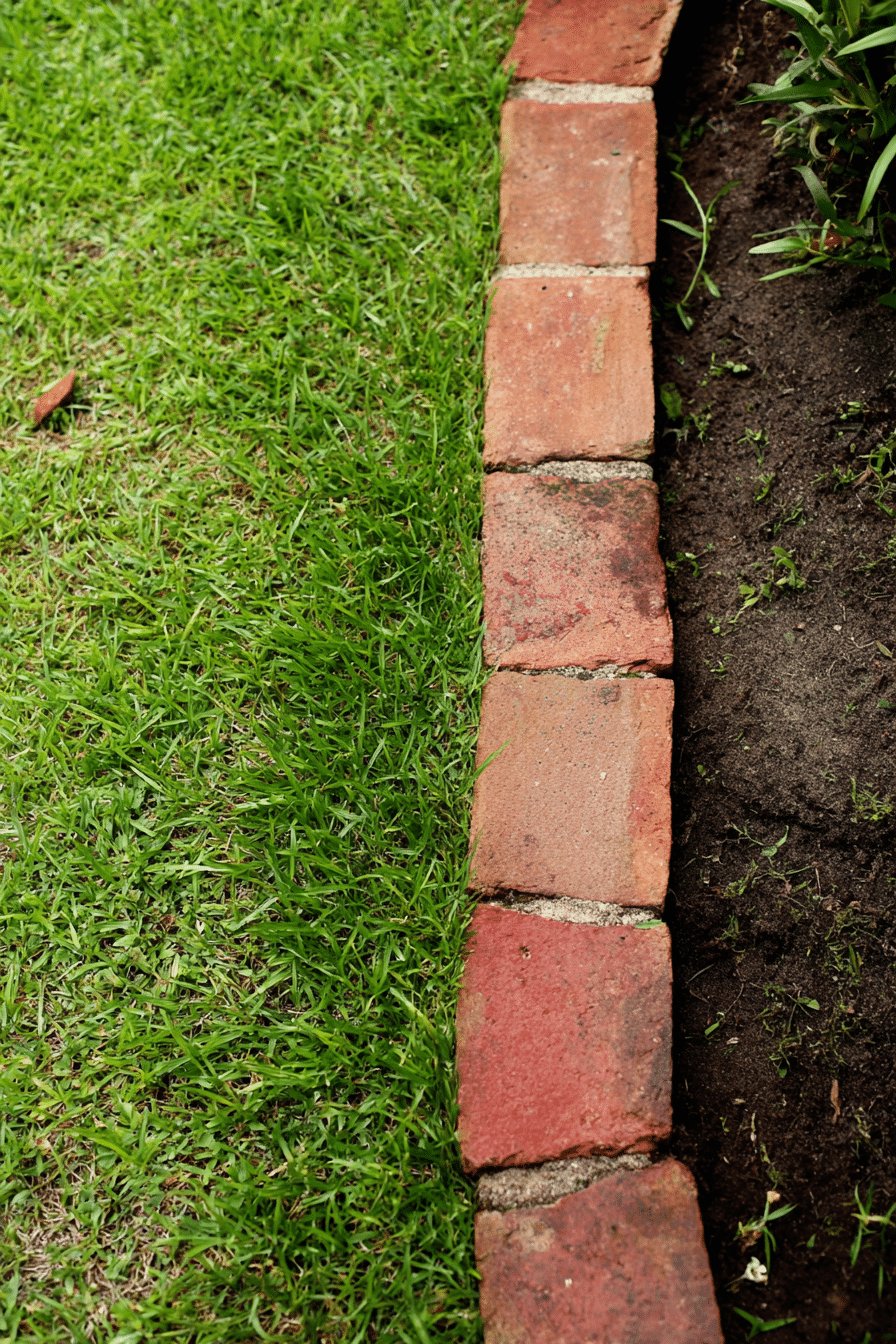
I love the warm, weathered look of this garden border edging. The worn red bricks give instant character and a soft, imperfect line that frames beds without feeling fussy.
It reads cozy and inviting, perfect for cottage beds, perennial-heavy borders, or a front lawn that wants to look lived-in not staged. The low profile keeps sightlines open so paths, patios, and little seating nooks still feel connected.
To complement it, let low perennials and groundcovers spill over the bricks, add a scattering of terracotta pots to echo the tones, and tuck a rustic bench or solar lanterns nearby for easy evening vibes.
Plant creeping thyme or sedum in the joints as living grout, keep the lawn edge tidy, and reset any shifted bricks now and then. Simple upkeep and a few soft plant layers, and this border looks intentionally effortless.
8) Rustic Weathered Charcoal Wood
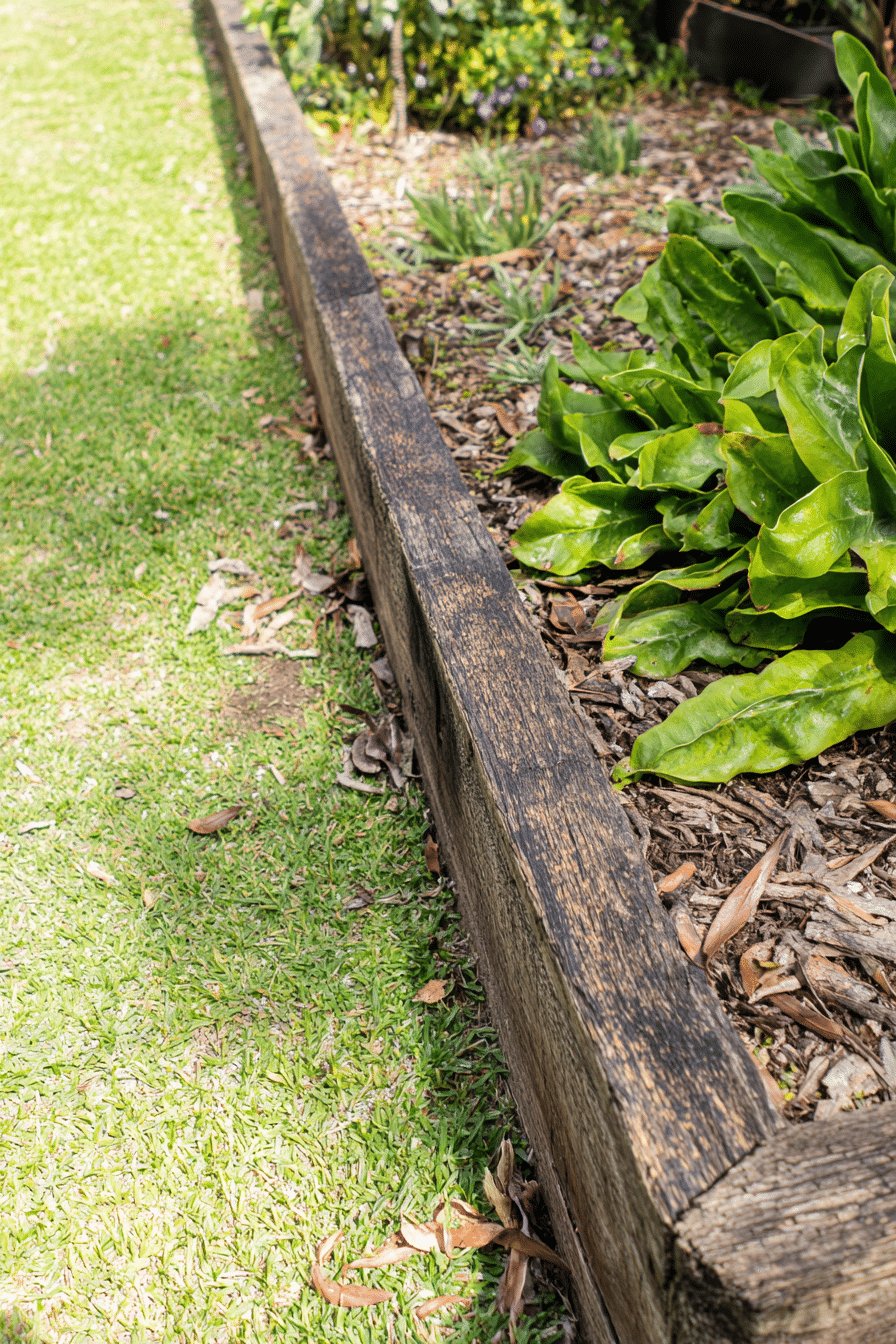
I love the chunky, weathered timber edging here. The rough grain and soft, dark patina feel so lived in and low fuss, like the garden version of a cozy sweater.
It gives the bed a clean, grounded edge without shouting for attention, and the height is just right for making plants look deliberate instead of wild. This kind of edging feels perfect for cottagey, native, or mixed perennial borders where warmth and texture matter more than slick perfection.
To make it sing, let low perennials and groundcovers spill gently over the edge, add a few clumps of ornamental grass for movement, and use warm mulch or terracotta pots to echo the timber tones. If you want a tiny glow, tuck in solar stake lights or a rusted metal ornament for vibe.
If you like the look but want less maintenance, a light sanding and oil will keep it looking fresh without losing that slightly imperfect charm.
9) Rustic Grey Stones
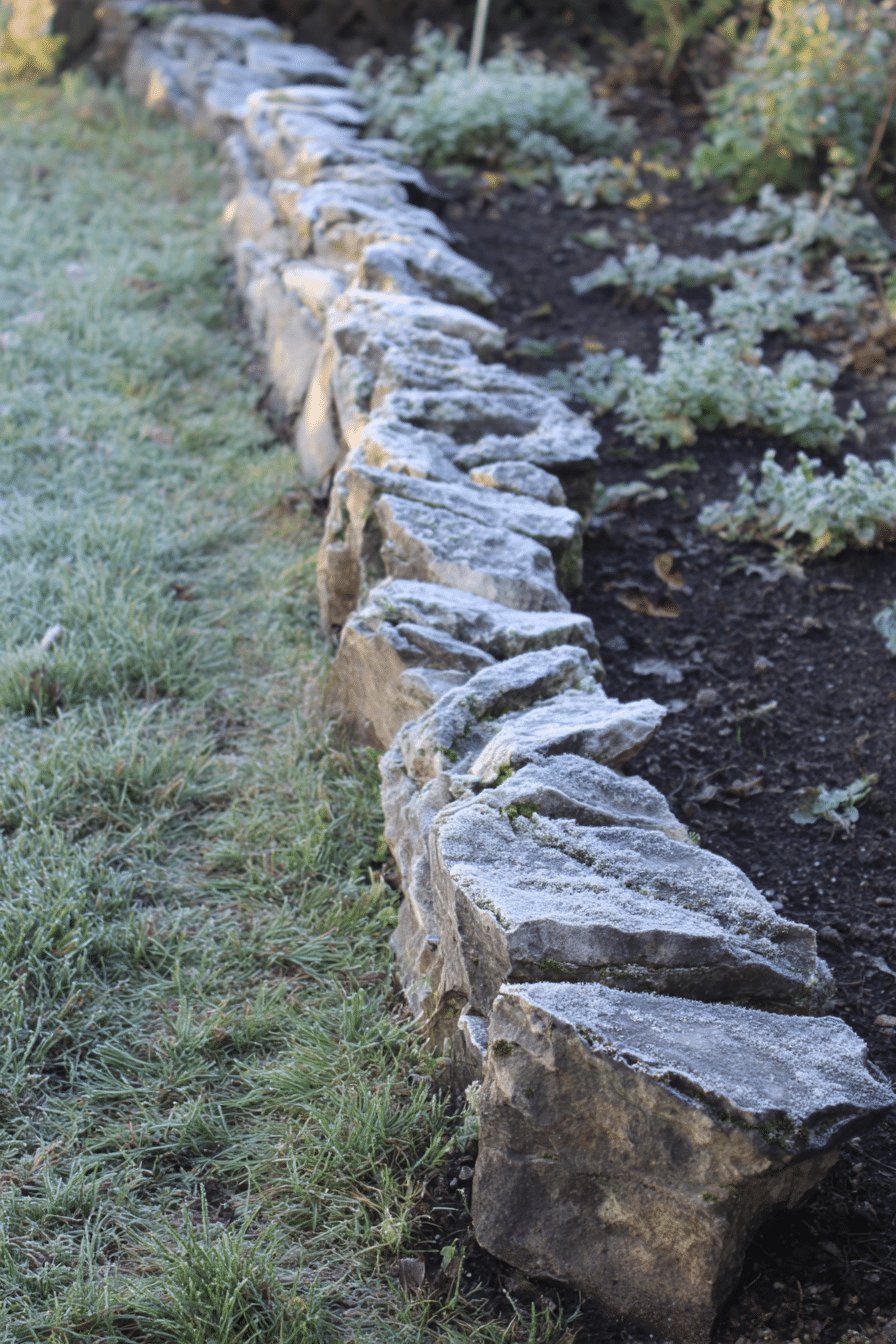
I love how this low, jagged stone border reads like a high-five to the garden, rough and honest but somehow elegant. The frost-dusted tops and mossy nooks give it cozy, lived-in charm, and the uneven profile frames beds without bossing them around.
It feels right in cottage, meadow, or woodland-style gardens where perennials and groundcovers can spill over and soften the edges.
I wouldn’t pick this for a super sleek, modern yard because the natural texture could clash with clean lines, and the uneven tops are not great if you need a perfectly level edge for mowing.
Style it with thyme, sedum, and low geraniums tumbling over the stones, tuck tiny ferns into crevices, and add a weathered bench or terracotta pots nearby. Soft solar lights or a string of bulbs will make the whole thing feel extra inviting at dusk.
10) Crisp Light Gray Concrete
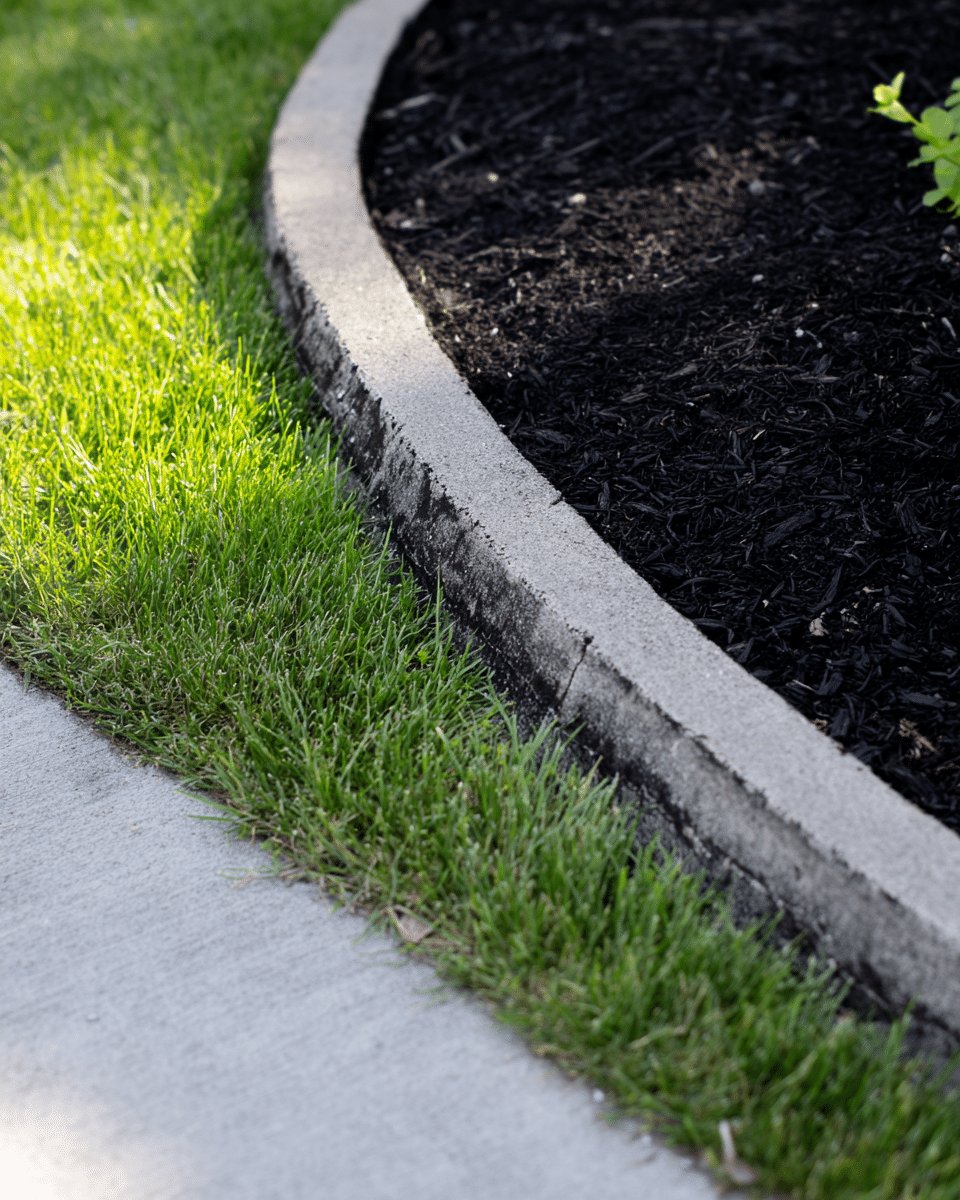
I love how the clean curve of this concrete border instantly makes a bed look put together without trying too hard. The pale, slightly rough concrete reads modern but friendly, and it gives that sharp contrast to black mulch and green grass that makes colors pop.
It feels durable and zero-fuss, so it’s perfect for high-traffic front yards, tidy cottage borders with defined shapes, or anywhere you want a neat, sculpted edge that stays looking crisp.
To style it, I’d let low perennials and groundcovers flirt over the rim—think sedum, creeping thyme, or soft lamb’s ear—then add a couple of taller architectural pieces like ornamental grass or a small shrub to play with height.
Toss in warm terracotta pots or a solar path light along the curve for evening drama, keep the grass trimmed with an edge trimmer, and you’ve got an effortless, polished border that still feels approachable.
Popular Reads
11) Rustic Honey Brown Logs
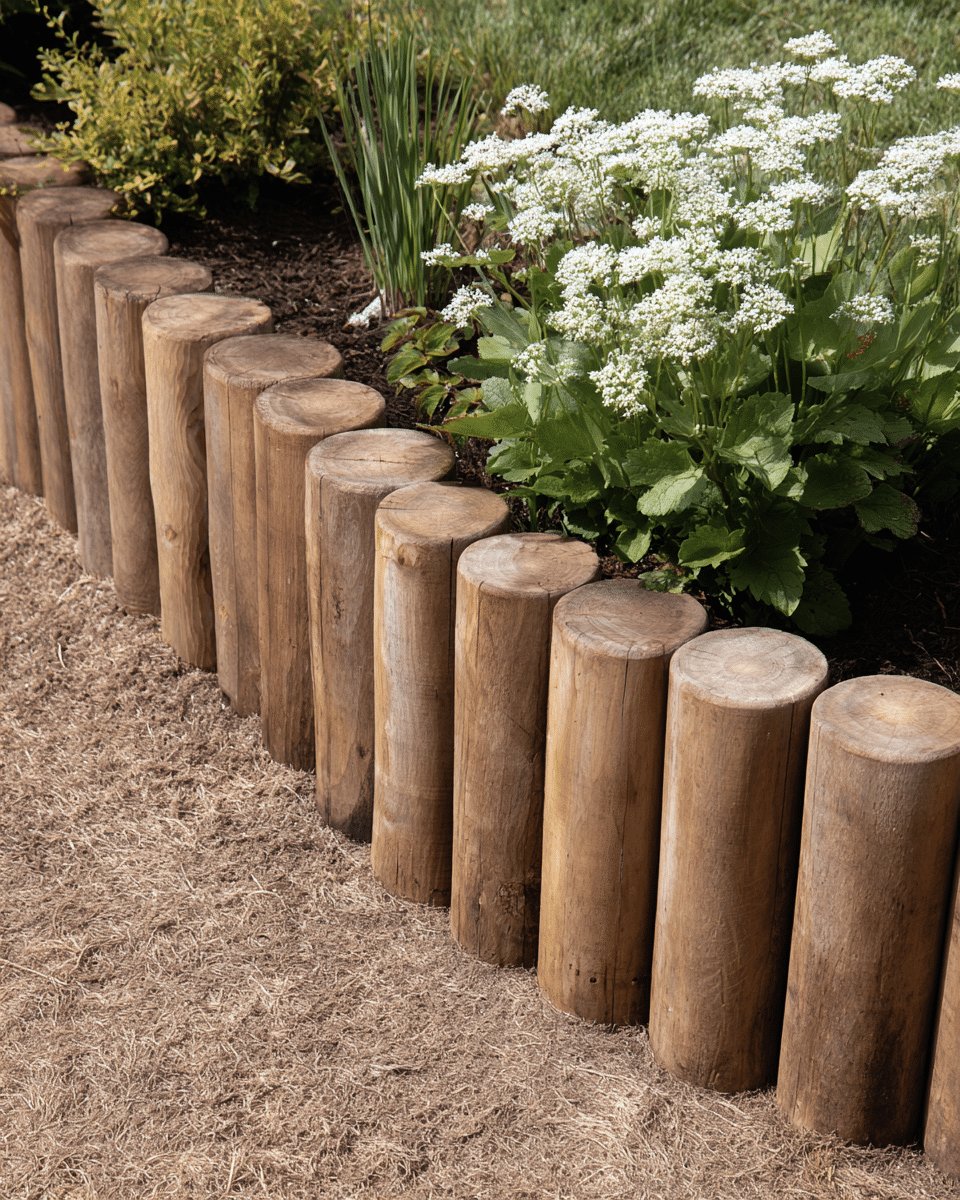
I love the cozy, slightly rustic vibe this log-border brings. The rounded tops and warm wood tones feel effortless and earthy, like your garden put on its favorite sweater.
The staggered heights give it personality so the edge reads organic, not fussy, and it does a great job of holding soil while still letting plants spill over in a soft, natural way.
This look sings in cottage, woodland, or country-style gardens and is perfect for raised beds, play areas, or paths where you want charm over perfection.
To style it, let perennials and trailing groundcovers tumble over the tops, add a gravel or bark path for contrast, and dot in terracotta pots or a little bench for extra warmth. Keep the finish natural if you want that lived-in feel or oil it for richer tones, and consider a simple mulch or low bulbs in front to soften the base and extend interest into every season.
12) Large Beige Stones
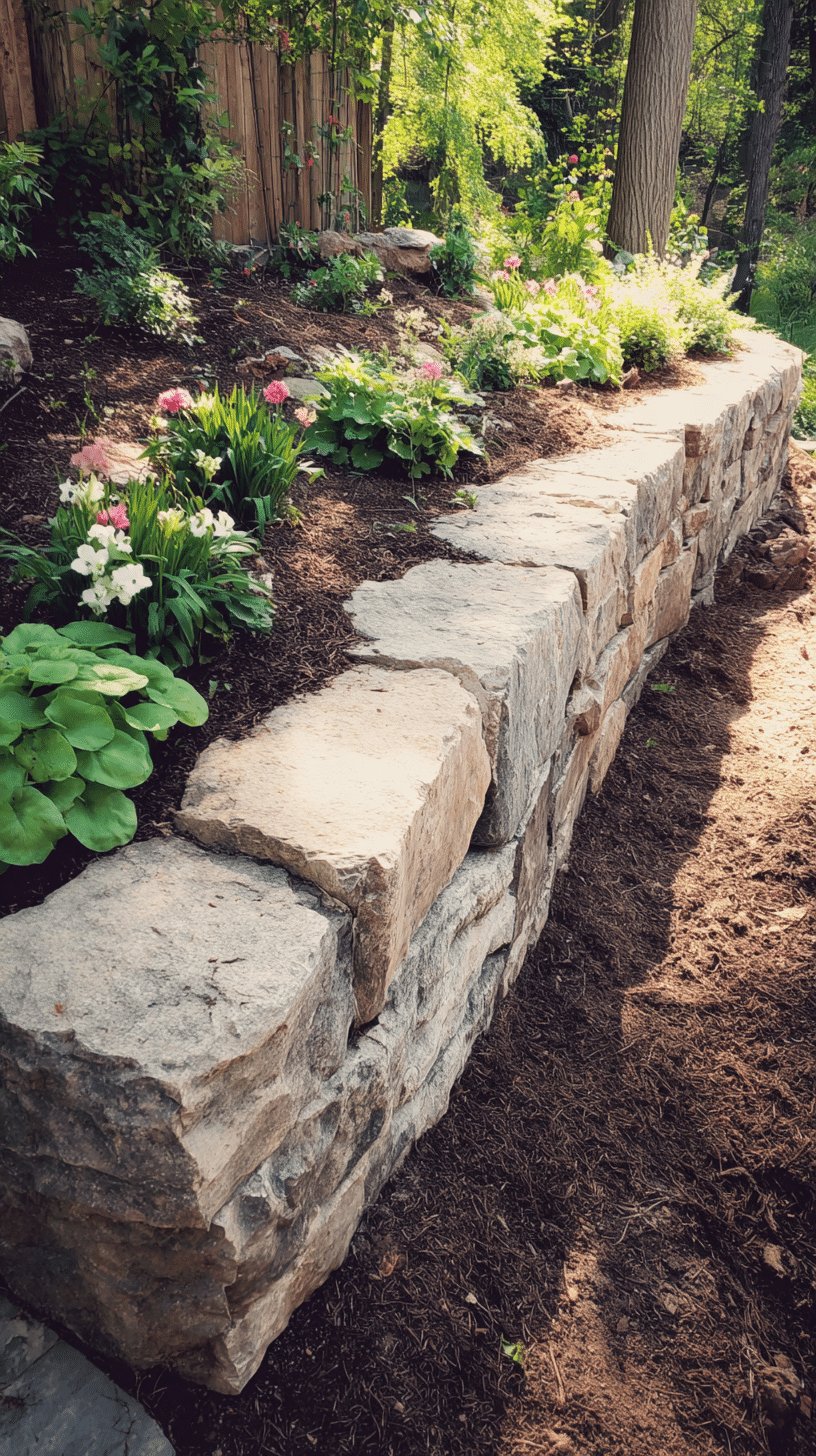
I love how the rough-hewn stone border reads like a natural hug for the bed. The warm, sandy tones and chunky tops feel both sturdy and relaxed, so the edge anchors the slope without shouting.
The gentle curve gives the whole space flow, and the height is perfect for turning a planting bed into a little stage for perennials and spring bulbs. Big rock energy, but friendly.
I wouldn’t pick this look for a super sleek, ultra-modern yard since the stones lean rustic. I’d style it with layers of hostas, ferns, and low geraniums spilling over the edge, plus a few creeping thyme or sedum for soft, trailing texture.
Add mulch to keep the beds tidy, a simple rustic bench or lantern for cozy evenings, and a couple terracotta pots to echo the stone colors.
13) Rustic Terracotta Brick
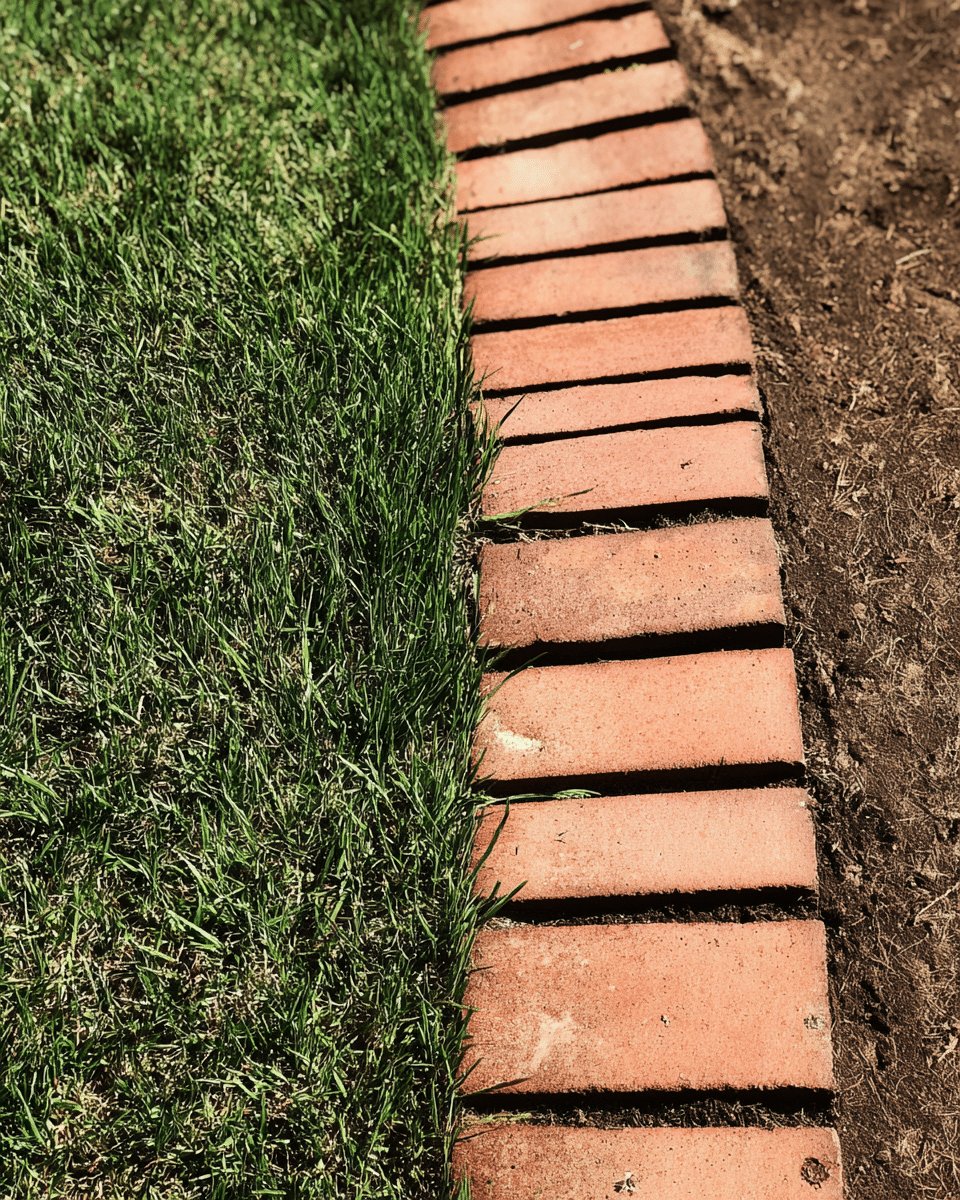
I love how the warm terracotta blocks give the bed a neat, lived-in look without trying too hard. The slight spacing between each brick creates a pleasing rhythm and a spot for little bits of grass or thyme to peek through, which makes the edge feel intentional and charming rather than rigid.
It frames the lawn in a way that reads cozy and approachable, so it’s great for cottage vibes, family yards, and any garden that wants to feel welcoming and a little bit handmade.
To style it, let low groundcovers like creeping thyme or dwarf sedum spill into the gaps, add a couple of terracotta pots or a weathered bench nearby, and use dark mulch or soft gravel on the planting side to make the brick color pop.
Keep the grass trimmed and tuck soil back around any loose bricks as needed, and you’ve got an effortless border that does the job and looks delightful doing it.
14) Curved Mossy Red Bricks
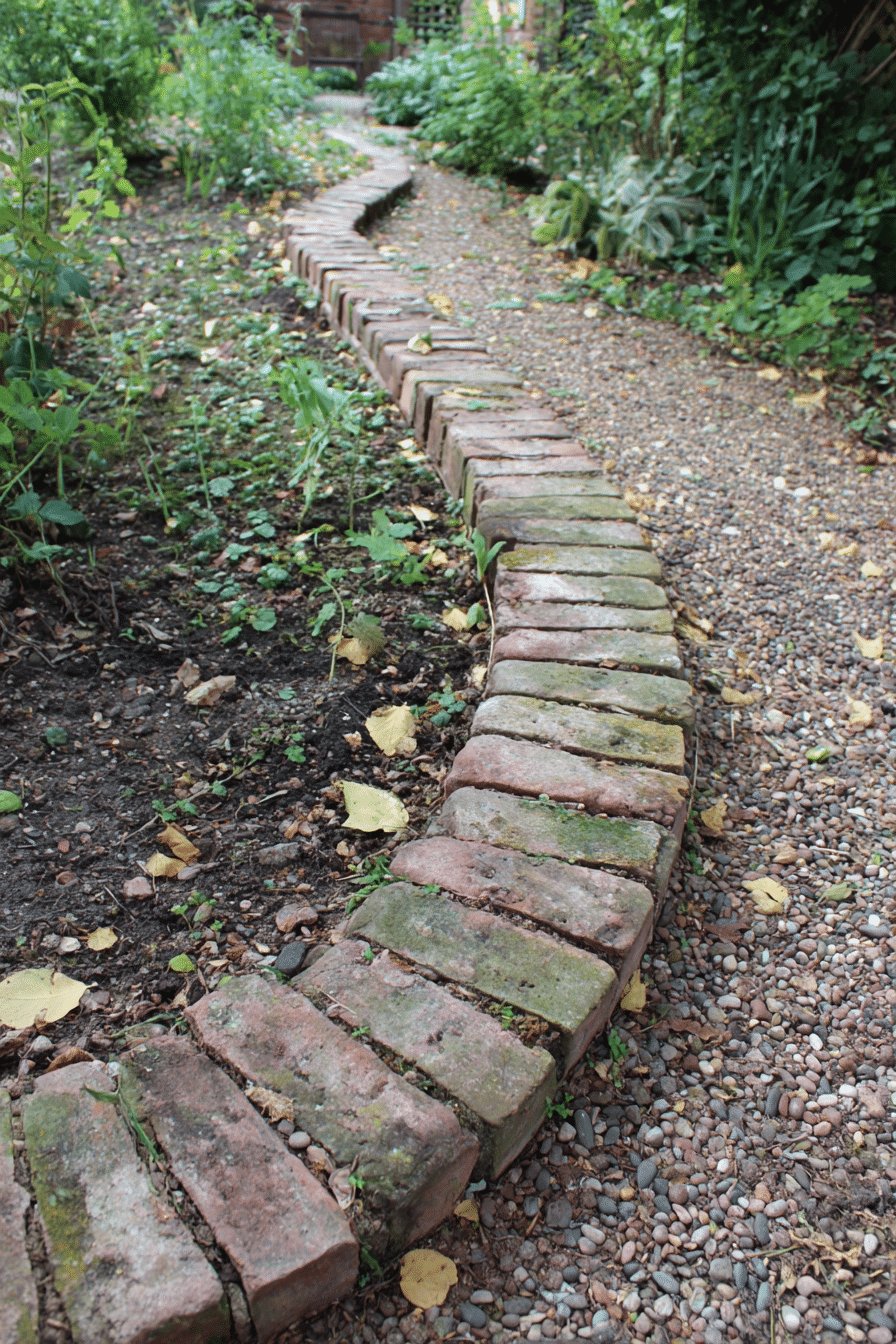
I love the goofy, lived-in charm of this brick border. The bricks are set on edge so the border reads like a little ribcage for the path, and their mossy, uneven tops give the whole garden a relaxed, story-filled vibe.
It frames the gravel nicely and nudges plants to spill over in a soft, accidental way, which is exactly my kind of tidy chaos. This feels perfect for cottage-style plots, shady paths, or any space that wants a vintage, welcoming touch.
I’d style it with low runners like thyme or sedum tucked between the bricks, a few spilling perennials at the edge, and a cluster of terracotta pots or a weathered bench nearby for instant coziness. Keep maintenance low by pulling weeds and nudging any loose bricks back in place, or lean into the moss and let it look properly earned.
15) Warm Terracotta Mosaic
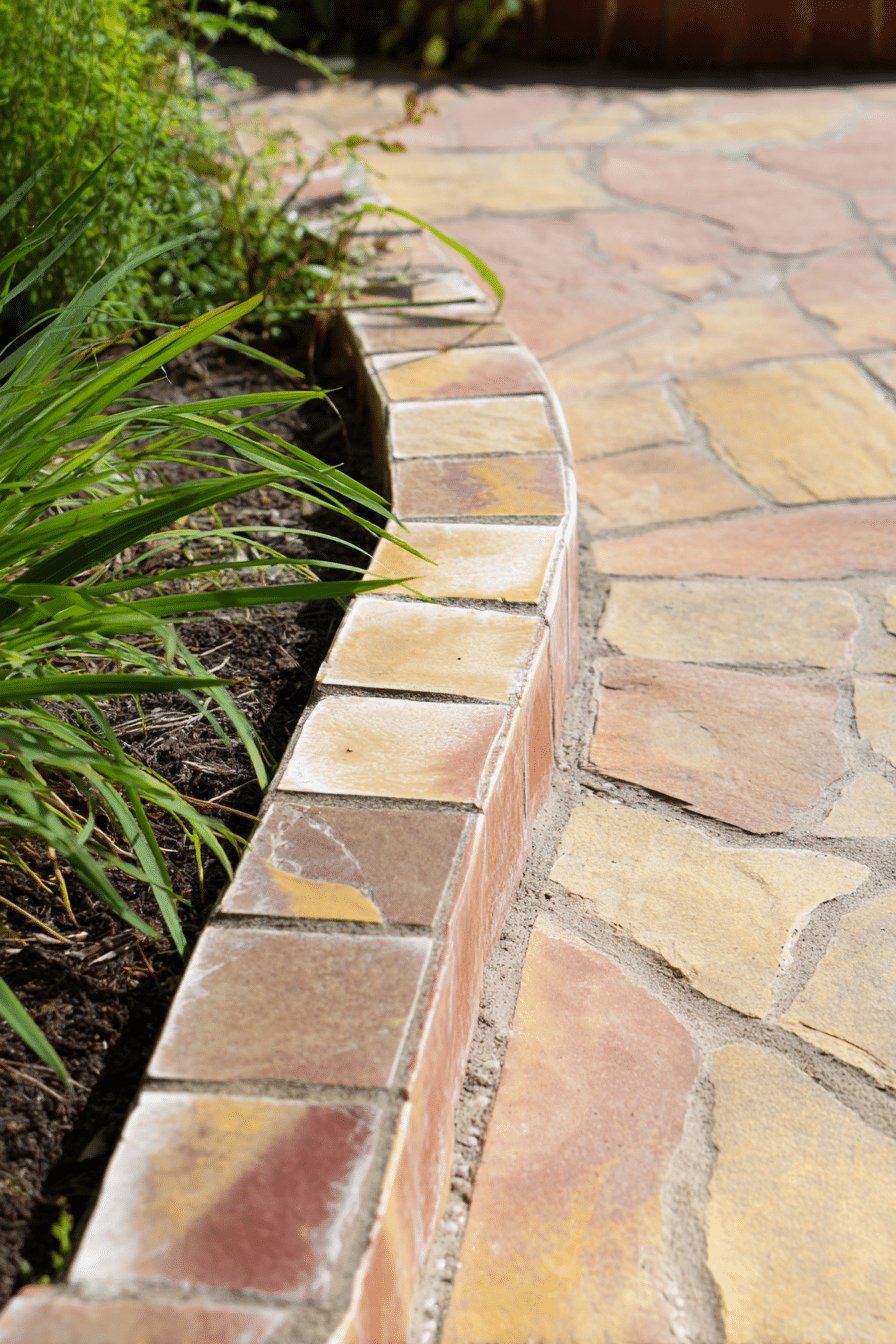
I love the warm, slightly sunbaked feel of this garden border edging. The little tile-top stones read like a mini mosaic and give the bed a polished, intentional edge without trying too hard.
The curve is everything here — it guides your eye and makes the path feel cozy, like the garden is giving you a gentle hug.
The color mix of ochre, terracotta, and soft brown ties beautifully to the flagstone, so the whole area reads as one calm, earthy moment.
I’d pair it with grasses and perennials that spill over the edge, a few terracotta pots, and low herbs like thyme tucked into the corners for scent and softness. Add a rustic bench or a string of warm lights and you’ve got instant courtyard energy.
16) Weathered Gray Brown
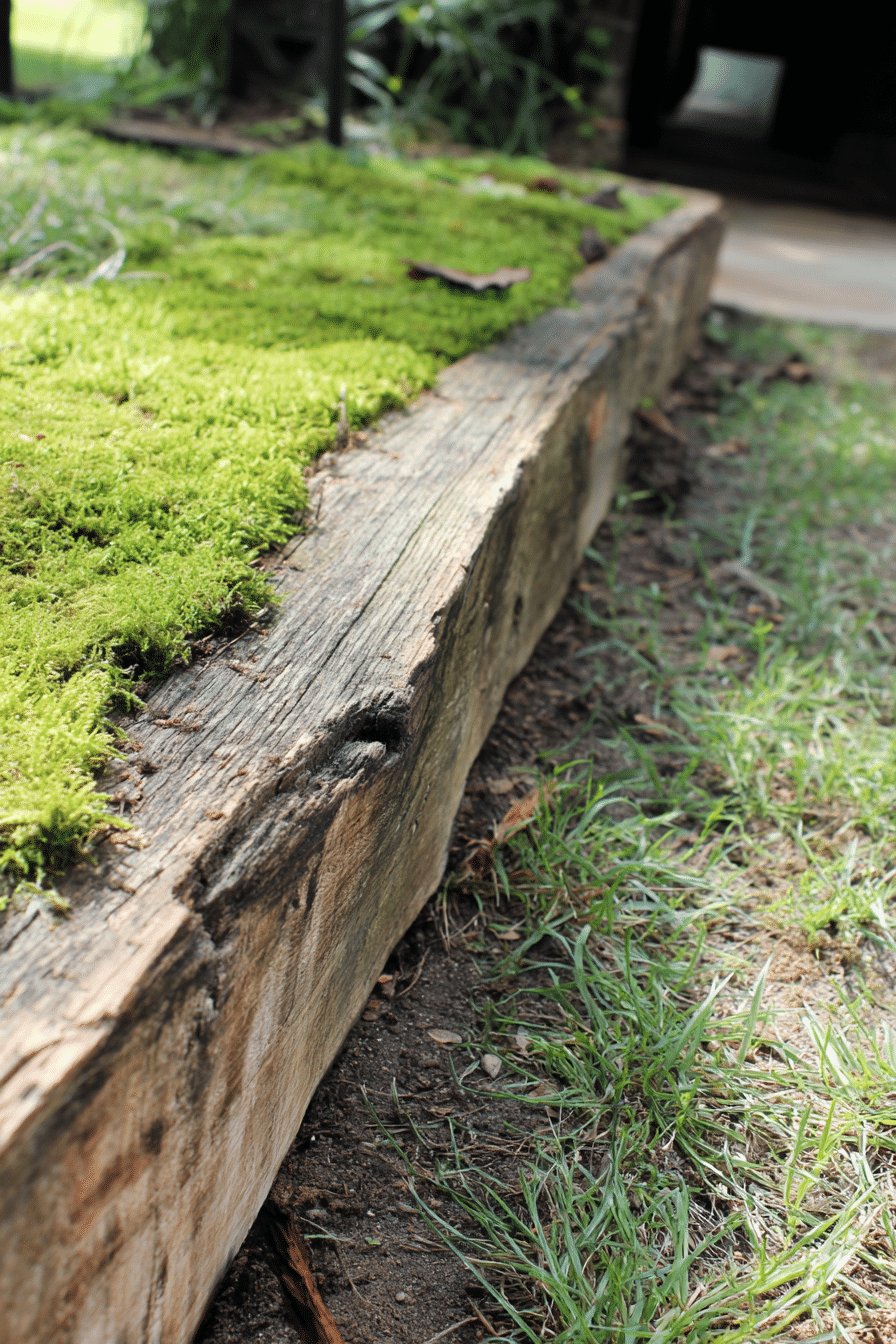
I love the lived-in, weathered feel of this garden border edging. The rough-hewn timber reads so honest and grounding, and the soft moss spilling over the edge gives it that storybook, come-sit-a-while vibe. It frames beds without fuss and adds instant texture next to lawn or gravel.
This look works especially well in cottage, woodland, or relaxed backyard gardens where you want things to feel layered and a little wild.
I would not pick it for a very sleek, modern space where clean lines rule, or for areas that stay waterlogged unless the wood is sealed or swapped for stone.
To style it, let low-growing perennials and groundcovers tumble over the edge, add a few ferns or hostas for shade, and dot in terracotta pots or a rustic bench for extra charm. Soft pathway lighting and a scattering of bulbs will keep it cozy after dark. Simple, natural accessories keep the look effortless and very much of the outdoors.
17) Weathered Brown Wood
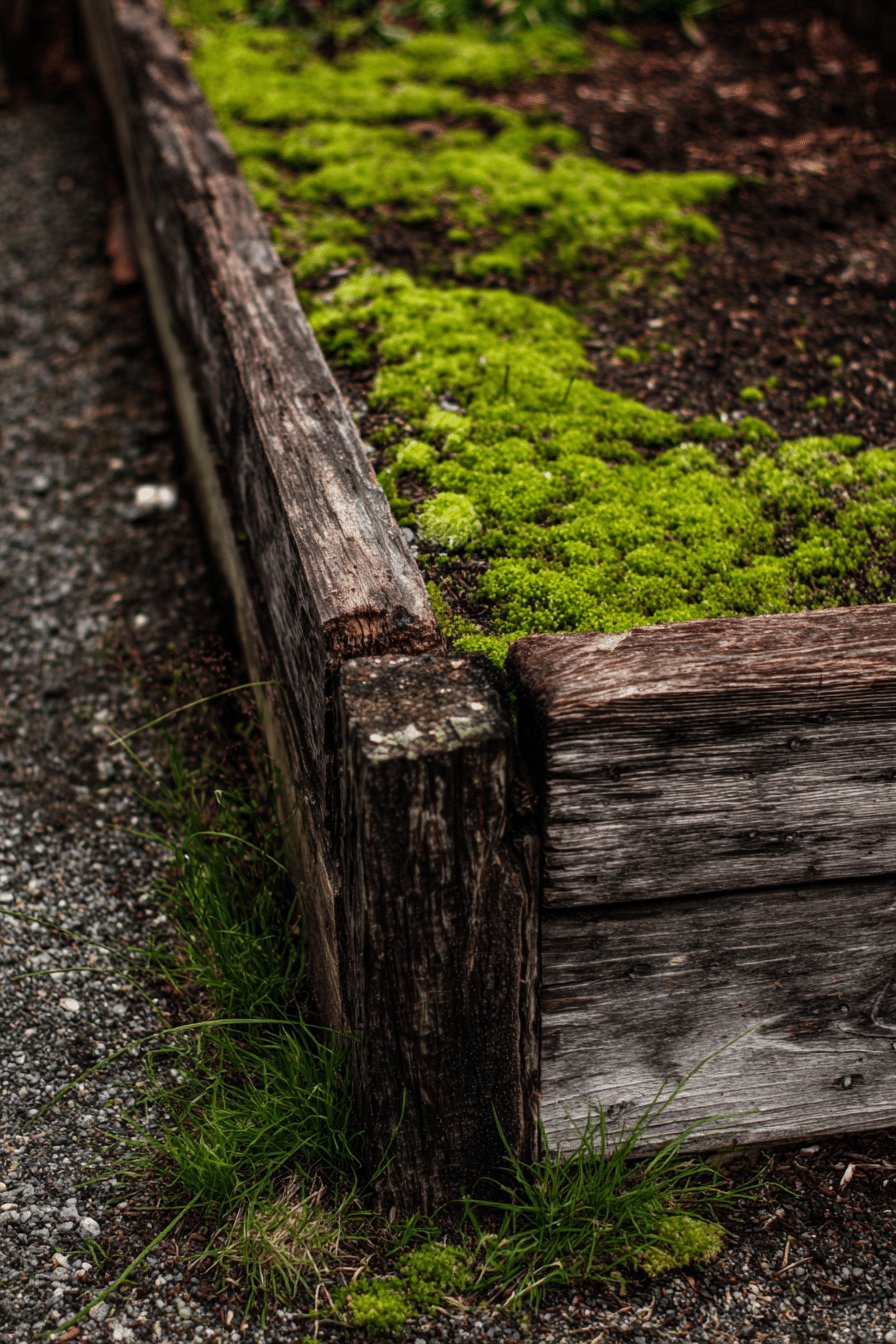
I love the worn, timber-sleeper vibe of this garden border. The weathered grey of the wood and that chartreuse moss create such a cozy contrast that feels both intentional and totally lived-in.
It frames the bed without being precious, so you get structure that still reads natural and relaxed. This is the kind of edging that makes a shade garden, cottage plot, or native planting look pulled together without fuss.
For styling, let plants spill over the edge—ferns, heuchera, creeping thyme, or low sedums look amazing—and keep a soft gravel path or a rustic bench nearby to echo the texture.
Add a cluster of terracotta pots, a vintage watering can, and some warm outdoor lighting for evening vibes. If you like low effort, embrace the moss and patina; if you want tidier, swap out a rotted board and use a narrow metal edging behind the sleepers to keep things neat.
18) Sleek Light Gray Curve
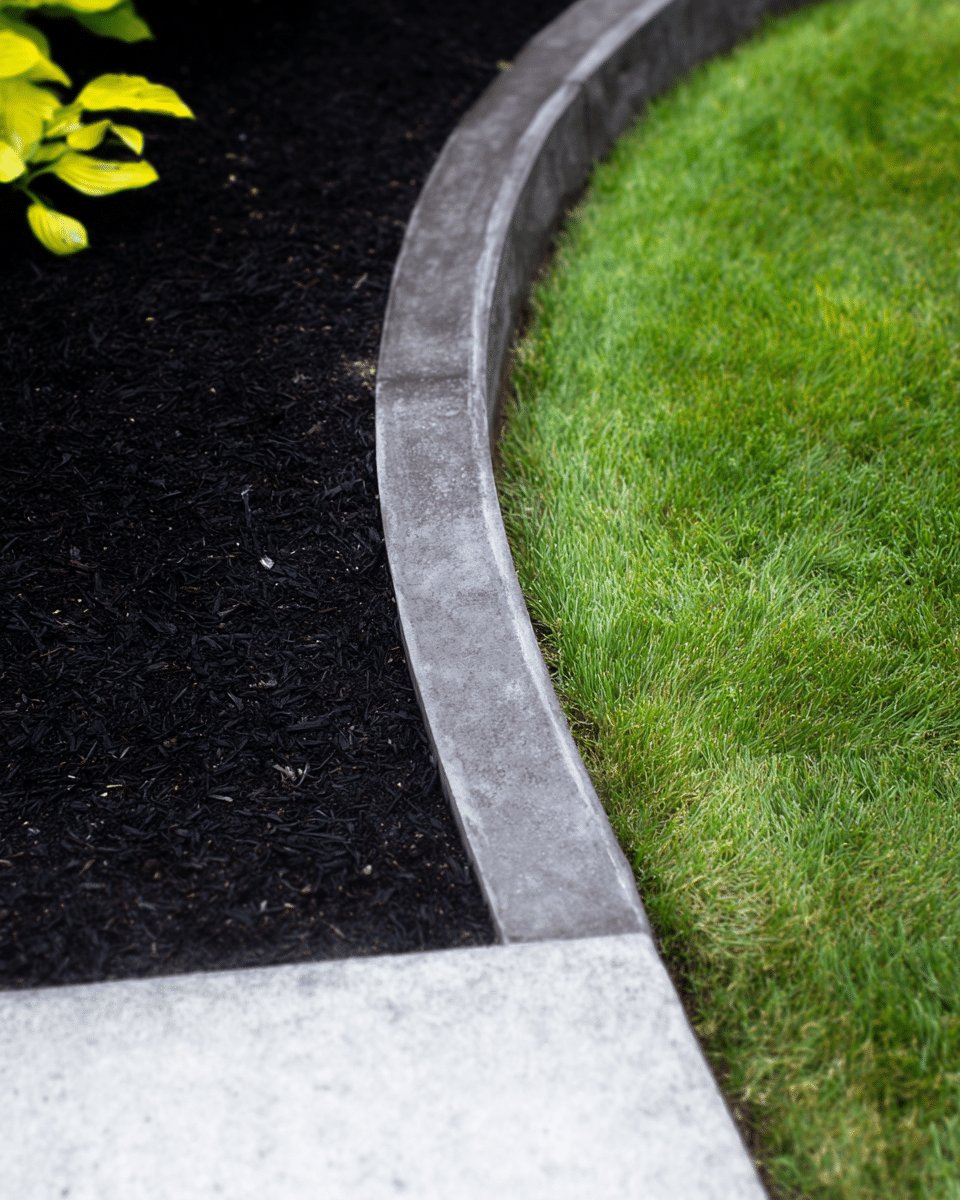
I love the crisp, curved concrete border — it reads clean and intentional without trying too hard. The cool gray edge makes that black mulch and neon lawn pop, so your plants actually get to be the stars. It feels modern but not precious, and the low profile keeps the look effortless and low maintenance.
Curves add a little romance, so this is perfect for tidy front yards, contemporary cottage mixes, or anywhere you want a neat frame without losing softness.
I wouldn’t pick this for a wildflower meadow or a super rustic, overgrown vibe where edges should disappear.
To soften it, let low perennials or trailing herbs like sedum, thyme, or a tidy hosta spill over just a touch. Add a warm element nearby — terracotta pots, a wooden bench, or soft gravel paths — and toss in a few low solar lights to show off the curve at night. Simple, bold planting and a couple of cozy accents will keep the look chic and totally un-fussy.
19) Rustic Limestone
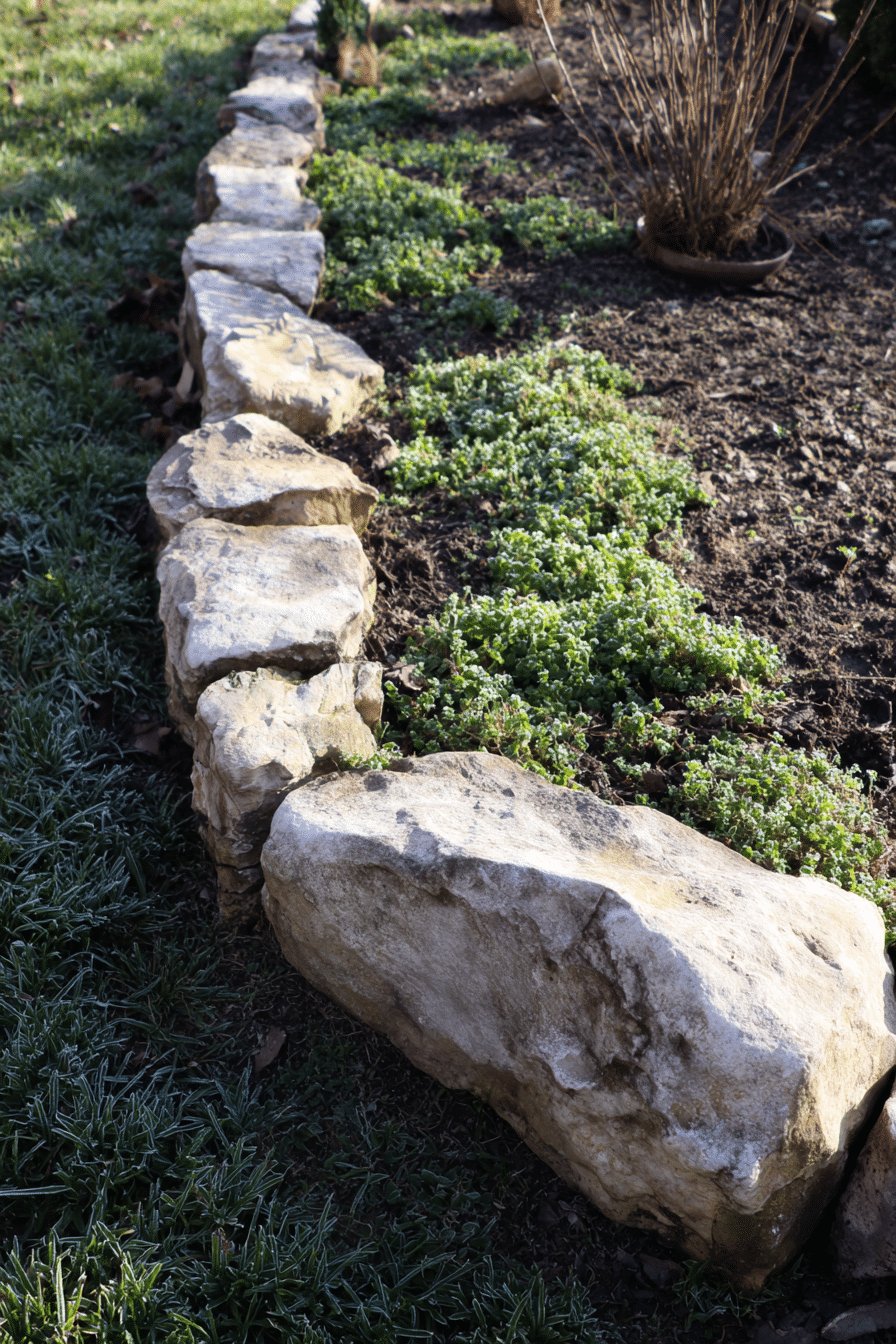
I love the chunky, natural look of this garden border edging. The stones feel like they were casually collected and placed, which gives the bed instant character without trying too hard. Their warm, sandy tones and rough texture catch the light and make the planting look more deliberate.
I like how low it sits, so it defines the space but still lets plants spill over and soften the line. Big rock energy, and yes I am here for it.
I wouldn’t pick this for a super modern or minimalist yard where you want crisp, precise lines, and it can be tricky if you need a mower-friendly edge that never shifts.
To style it, I’d let groundcovers like thyme, sedum, or creeping rosemary tumble over the stones, add a few clumps of ornamental grass for movement, and tuck in terracotta pots or a weathered bench for a relaxed vibe. A scatter of solar stake lights or a simple gravel path beside it keeps things practical and pretty, while a little moss in the stone crevices makes the whole border feel lived-in and charming.
20) Weathered Terracotta Brick
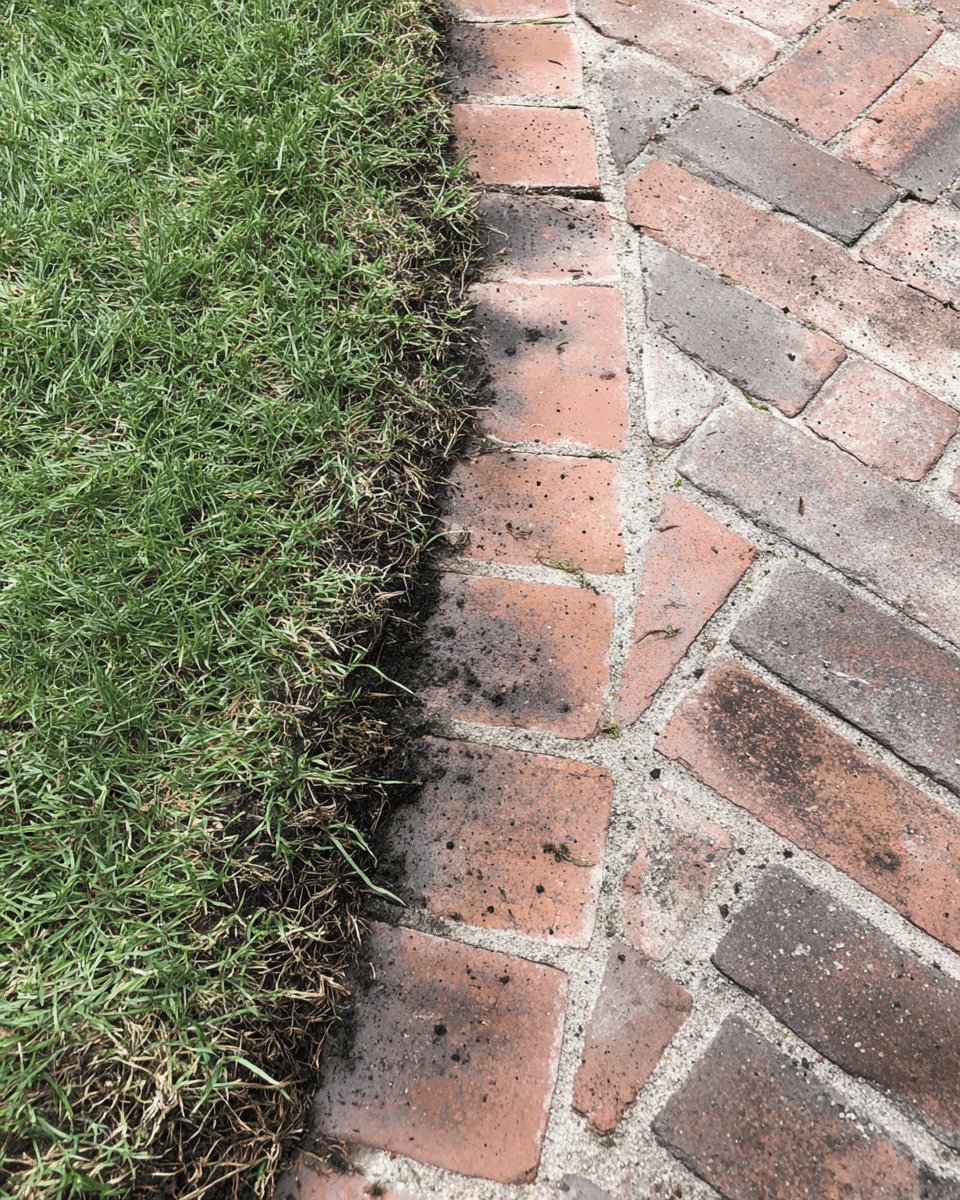
I love the warm, slightly weathered look of this garden border. The neat row of bricks creates a clean edge between lawn and path while the herringbone pavers add pattern and personality.
The contrast between the soft green grass and the earthy brick tones feels cozy and lived in, not precious. That little unevenness in the mortar? Totally adds charm and tells a story.
To complement it, let low groundcovers or thyme peek over the edge, tuck a few terracotta pots nearby, and add a weathered bench or a couple of solar lanterns for soft evening vibes. Keep maintenance simple: a quick edge trim, sweep the sand back into the joints, and let a bit of moss live there if you like that cozy, lived-in energy.
21) Brushed Steel
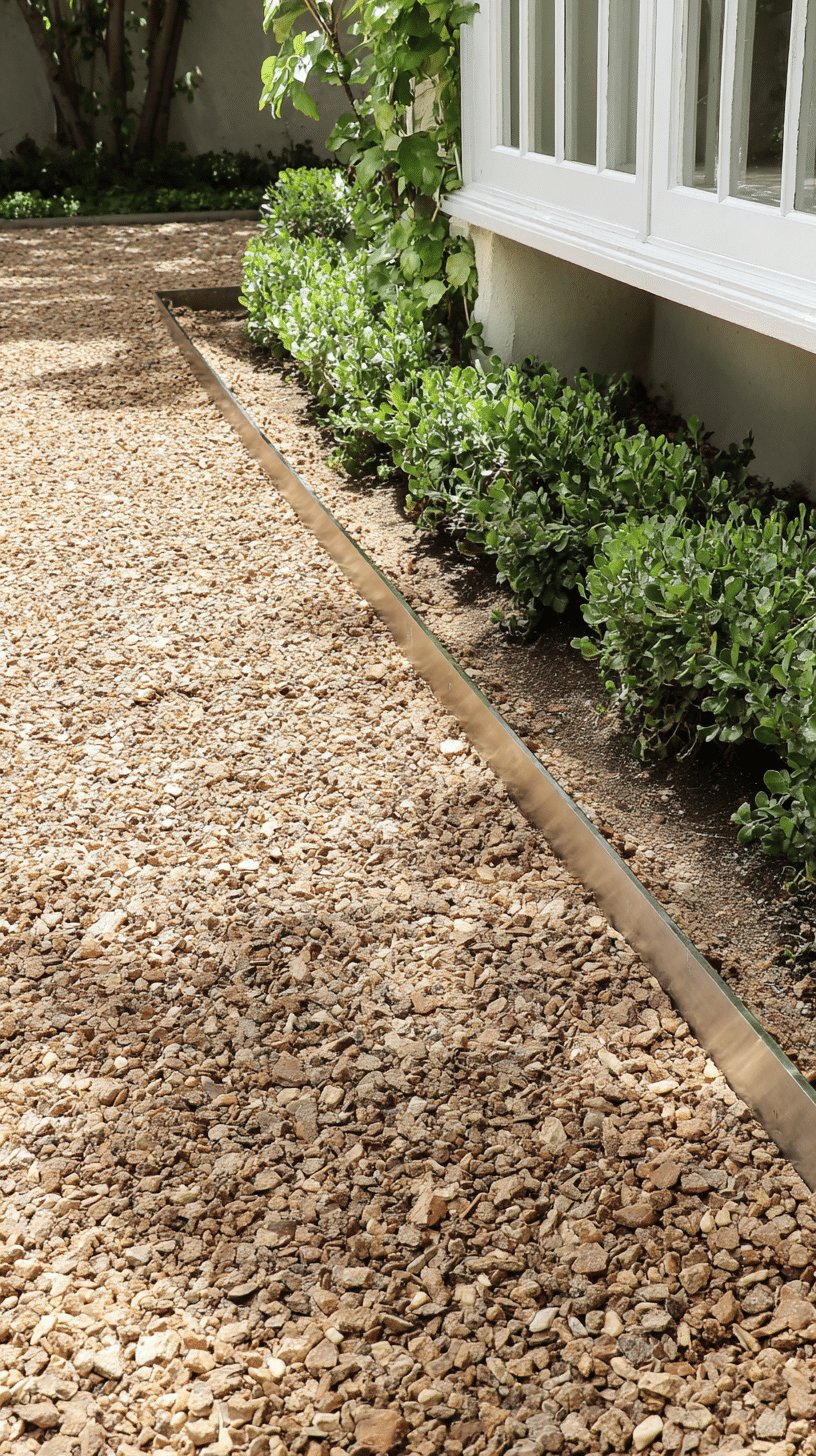
I love the way this low-profile metal edging gives the whole space instant polish. It reads modern without trying too hard, making the gravel feel intentional and the plant bed look like it’s had a mini-makeover.
The slim reflective line catches light and guides the eye, which is perfect for narrow courtyards, city front gardens, or any spot where you want order without fuss. It really sings when paired with tidy, low-growing shrubs or neat swathes of groundcover that can gently spill over the edge.
Lean into texture contrasts: soft gravel, a few terracotta pots, and a simple bench or woven chair to warm things up. Add low, fragrant plants or silver-leaved groundcover for soft edges and toss in a couple of solar stake lights for evening glow. Keep the planting layered and low so that sleek edging stays the star without feeling too severe.
22) Sun-Kissed Tan Stone
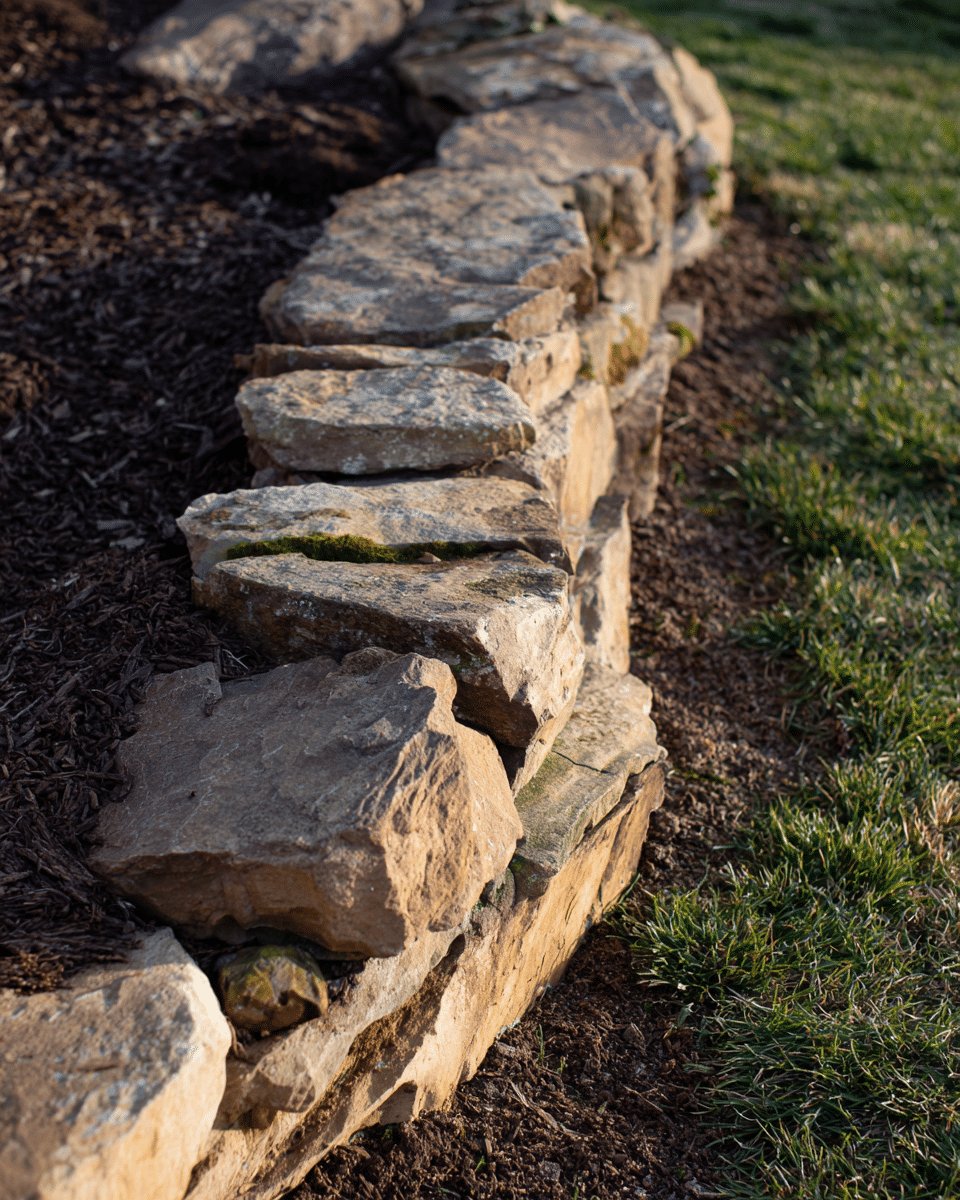
I love how the rough, stacked stones feel like they’ve always belonged there. The warm, sandy tones and little patches of moss make the border read cozy, not precious, and the uneven tops add a relaxed, handmade vibe.
It frames beds without shouting, tucks neatly against the lawn, and gives a subtle terrace that’s perfect for showing off plants that like to spill and soften the edges.
To style it, let low perennials and herbs tumble over the stones, add clumps of ornamental grass for movement, and tuck small succulents or creeping thyme into the cracks. Finish with a gravel path or a rustic bench nearby and a few terracotta pots to echo the stone tones.
23) Earthy Brown Logs
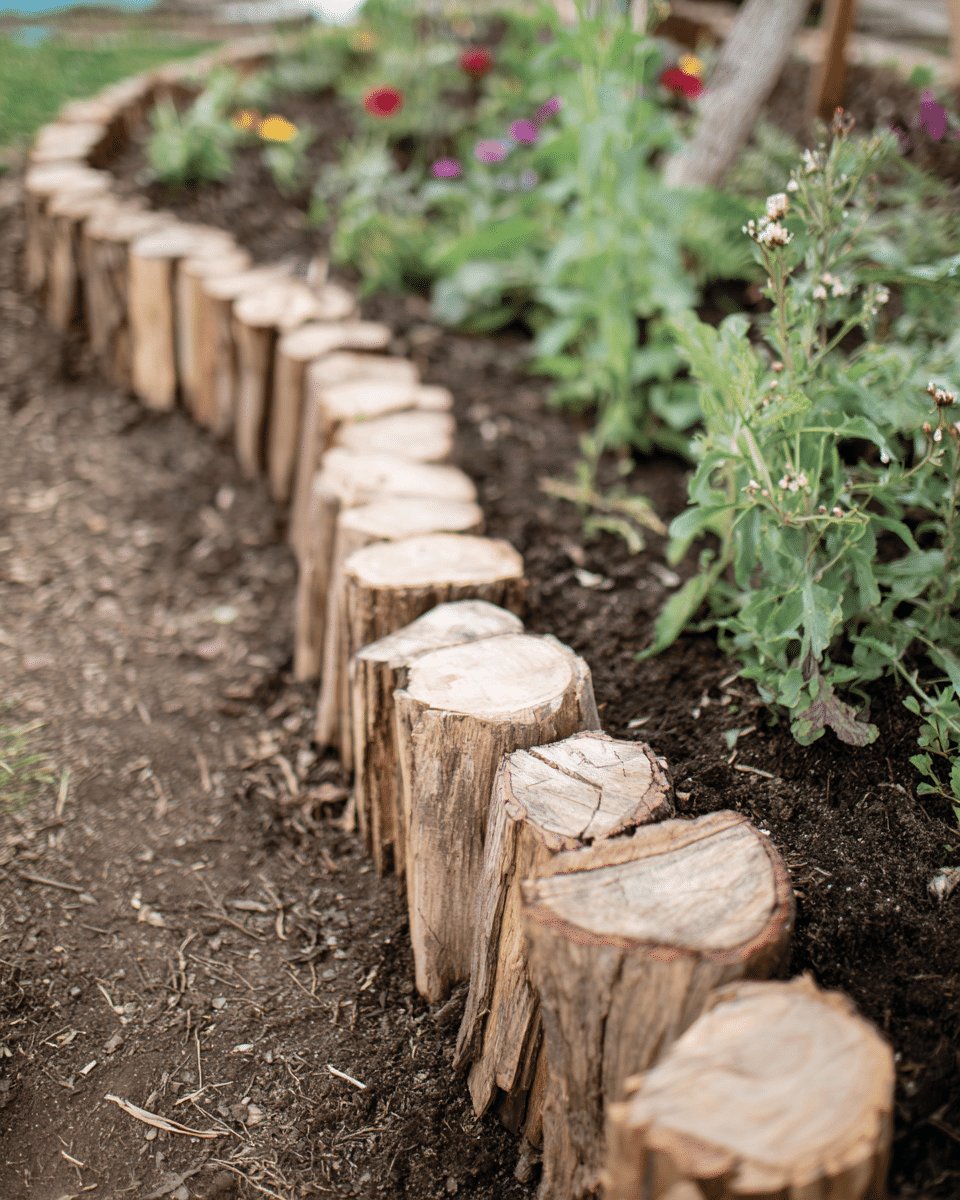
I love the raw, handmade feel of this log-edge border. The uneven tops and warm, weathered wood give the bed instant cozy charm and a playful rhythm that feels like a little wink at your garden.
The low, curving line defines the planting without shouting, so it shines in cottage beds, pollinator patches, kitchen gardens, or any spot where you want soft edges and plants that tumble. I don’t think it would sit right in a super slick, modern courtyard or a formal parterre where everything needs to be perfectly symmetrical.
Style it with lots of soft-edge plants like lavender, catmint, sedums, low grasses, and trailing herbs that will spill over the logs and blur the join between soil and path. Add a gravel walkway, a weathered bench, and a few terracotta pots to echo the wood tones and keep the vibe relaxed.
If you want the look to last, go for cedar or treat the bases and back them with landscape fabric to slow rot, or just let them silver over time for that perfect lived-in patina. Tiny solar lanterns or a string of fairy lights will make this border feel extra cozy after dark.
24) Rustic Red Brown
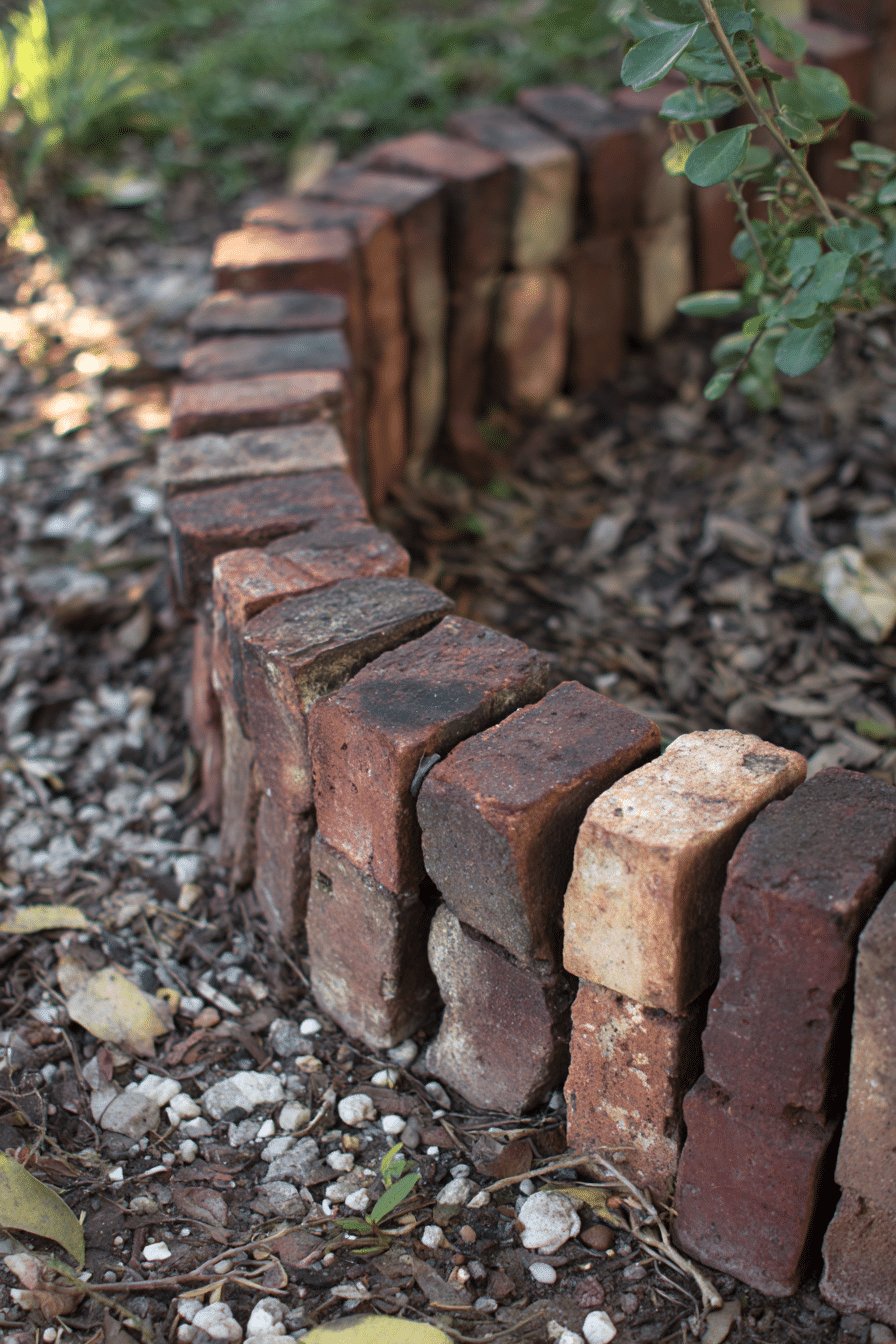
I love the worn, slightly crooked look of this brick border. The mix of warm reds, browns, and cream tones reads cozy without trying too hard, and the little ups and downs in height give the bed instant personality.
It feels handmade and welcoming, so it’s perfect for cottagey flower beds, herb patches, or a shaded corner that needs a touch of structure. The low, curvy line guides the eye without shouting, which I always appreciate.
To play it up, let creeping thyme or sedum spill over the bricks, add a soft gravel path, and tuck a weathered bench or a cluster of terracotta pots nearby for instant main character energy. Keep it tidy with a thin layer of mulch and a few anchored bricks so it stays charming rather than wobbly.
25) Rustic Tan Limestone
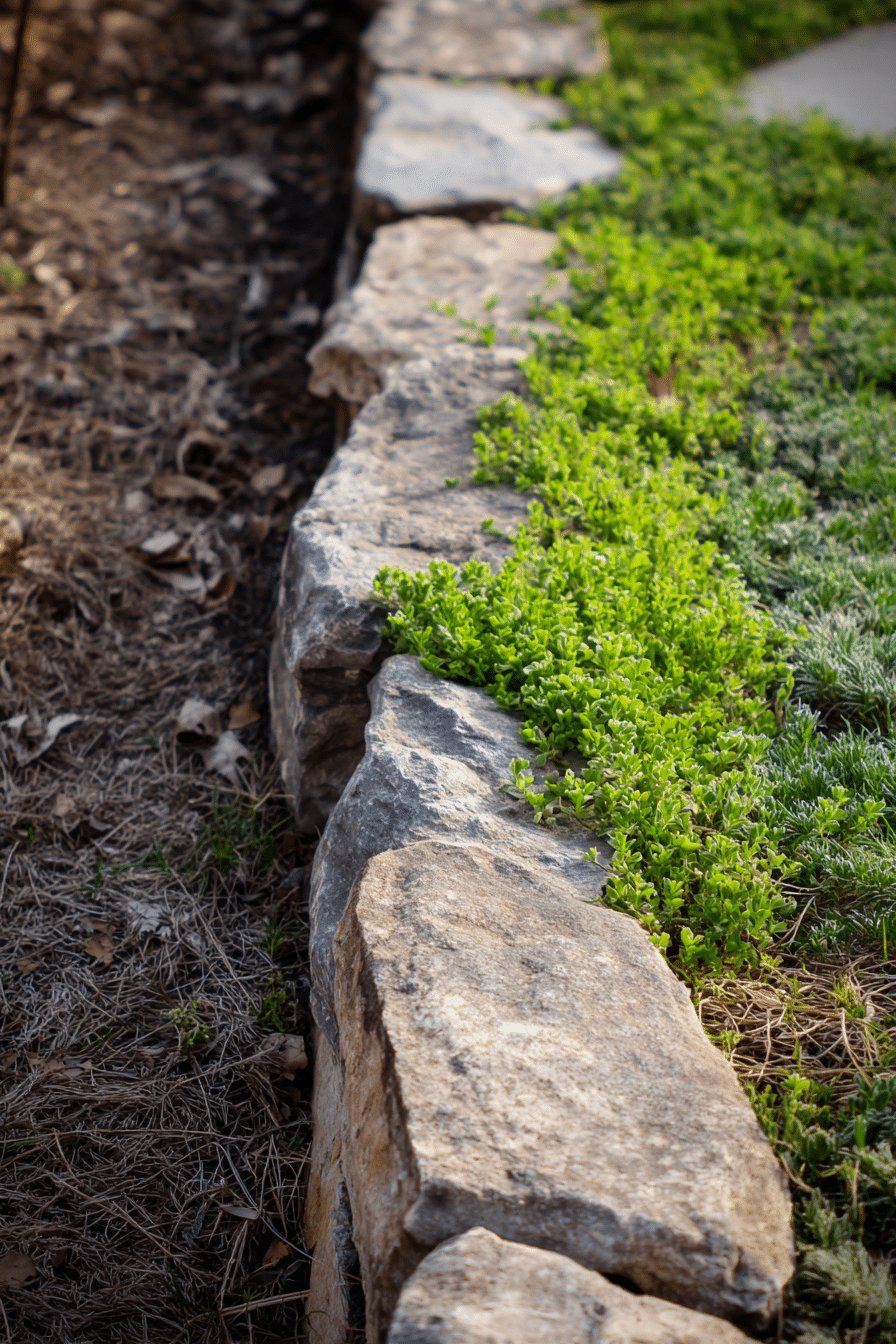
I love the honest, laid-back vibe of this stone border. The rough, irregular slabs feel like they were always meant to be there, giving the bed a grounded, natural edge that still looks tidy.
The warm beige and gray tones add texture without shouting, and the low height lets groundcovers spill over for that happily overgrown look.
Big stone energy, but in a chill way.
I’d skip this if your garden is ultra-modern or super formal since the rustic look leans casual and organic.
To style it, let low-growing sedum, creeping thyme, or ajuga tumble over the stones, then add taller perennials or ornamental grasses behind for depth. A soft gravel path, a weathered bench, and a few terracotta pots echo the stones and keep things cozy. Minimal maintenance—pull a weed, shift a stone now and then—and you’ve got a border that feels effortless and very Instagram-ready.
26) Rusty & Galvanized
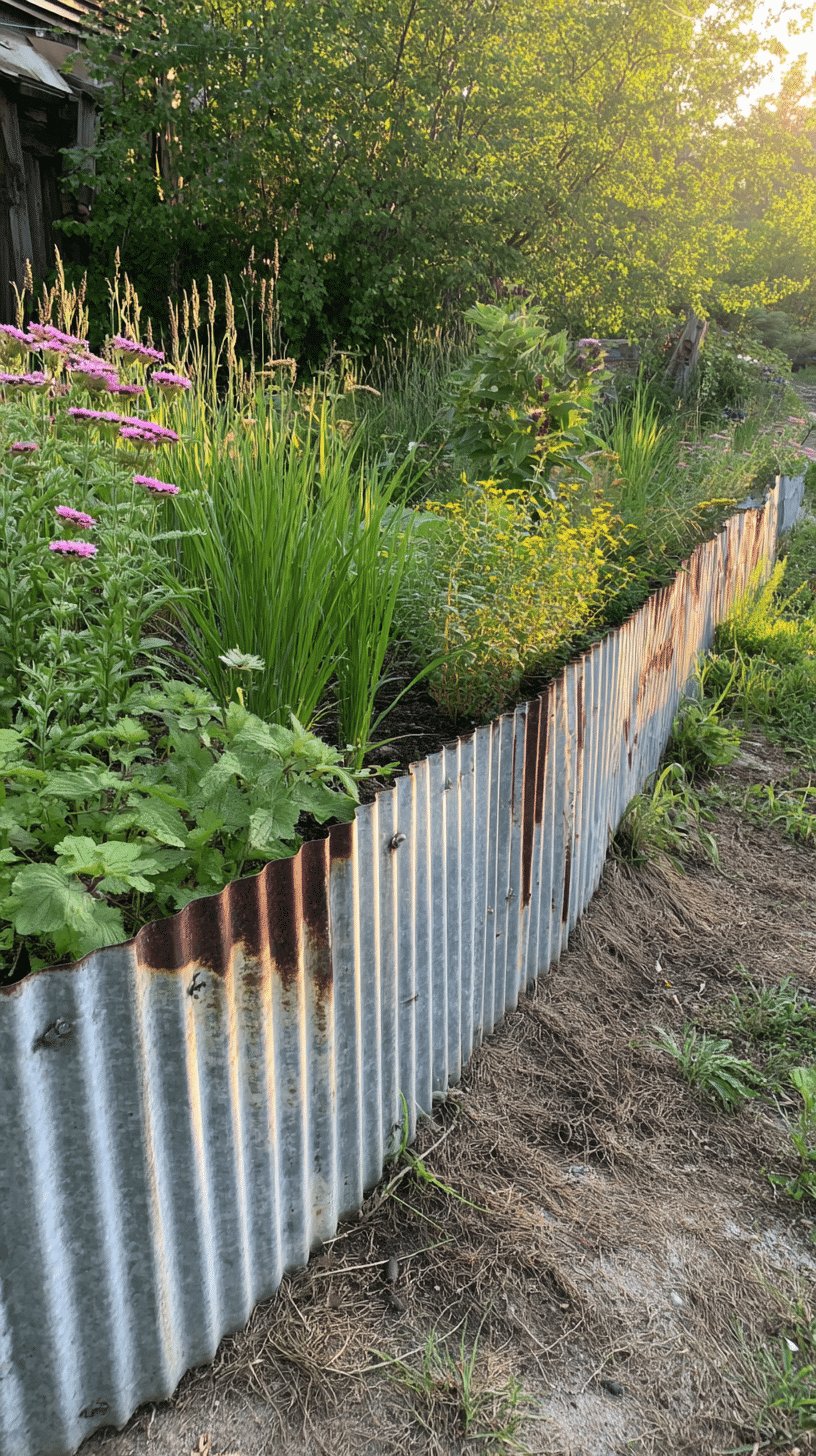
I love the scrappy charm of this corrugated metal border. The rusty ridges and soft waves give the bed structure without feeling precious, and the low profile lets the plants be the stars. It corrals soil, follows curves like a dream, and picks up evening light in a way that makes the whole border feel cozy and a little bit cinematic.
I reach for this look when I want relaxed cottage vibes, a casual edible patch, or a wildflower edge that reads as intentional but easygoing.
To complement it, I’d plant spilling perennials and upright grasses that soften the metal, tuck in terracotta or weathered pots to mirror the rust tones, and add a simple bench or string lights for atmosphere. If you want to dress it up, a coat of chalky paint on a panel or a neat gravel path along the front keeps things tidy without killing the personality.
27) Speckled White Concrete
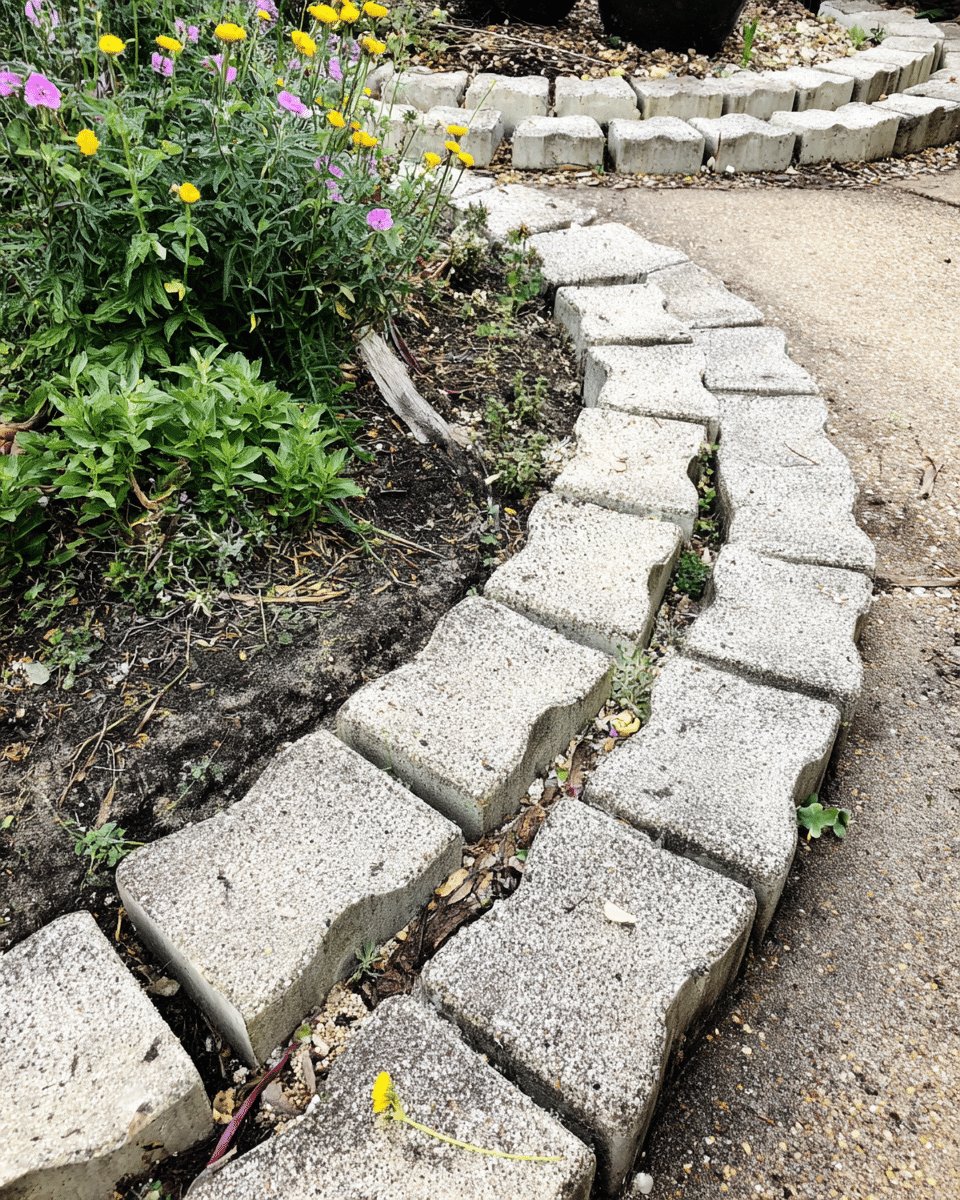
I love the chunky, slightly wavy concrete blocks for edging. They read casual and a little vintage without trying too hard, and the speckled, weathered surface soaks up sunlight in a way that makes the beds feel anchored.
The curve they create gives motion to the garden and lets spilling perennials do their thing, which I totally support. They feel perfect for cottagey borders, cottage-meets-modern yards, or a low-key front garden where practicality meets personality.
Let low groundcovers and thyme creep into the gaps, add a scattering of terracotta pots to echo the warm tones, and tuck a rustic bench or solar lanterns nearby for soft evening vibes. Keep the joints tidy with a quick weed-and-sweep now and then, or embrace the mossy bits for full charming-ruin energy.
28) Rustic Natural Log
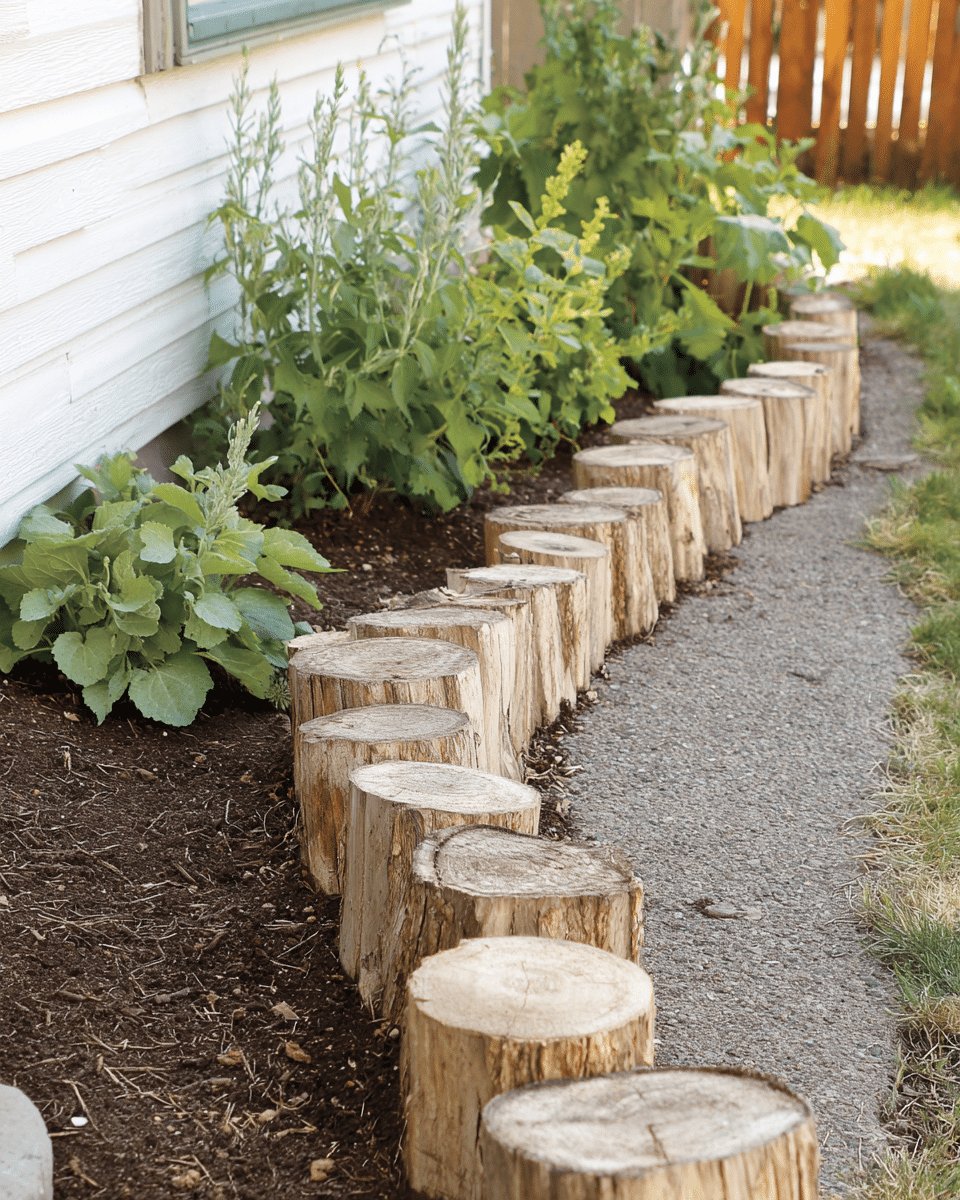
I love the relaxed, hands-on feel of this log-slice border. The round tops and rough bark create a lovely, natural rhythm along the bed and instantly warm up the edge of the garden. It reads handmade and low-pressure, so it’s perfect when you want charm over perfection.
The wood texture plays nicely with airy foliage and looks great next to a gravel path or a scrappy lawn.
Style it with low perennials and groundcovers that tumble over the logs, tuck taller, airy plants behind for depth, and add a few solar lanterns or terracotta pots for personality. Seal the tops if you want them to last longer, expect a gentle patina over time, and don’t stress replacing a slice now and then.
29) Sleek Matte Black
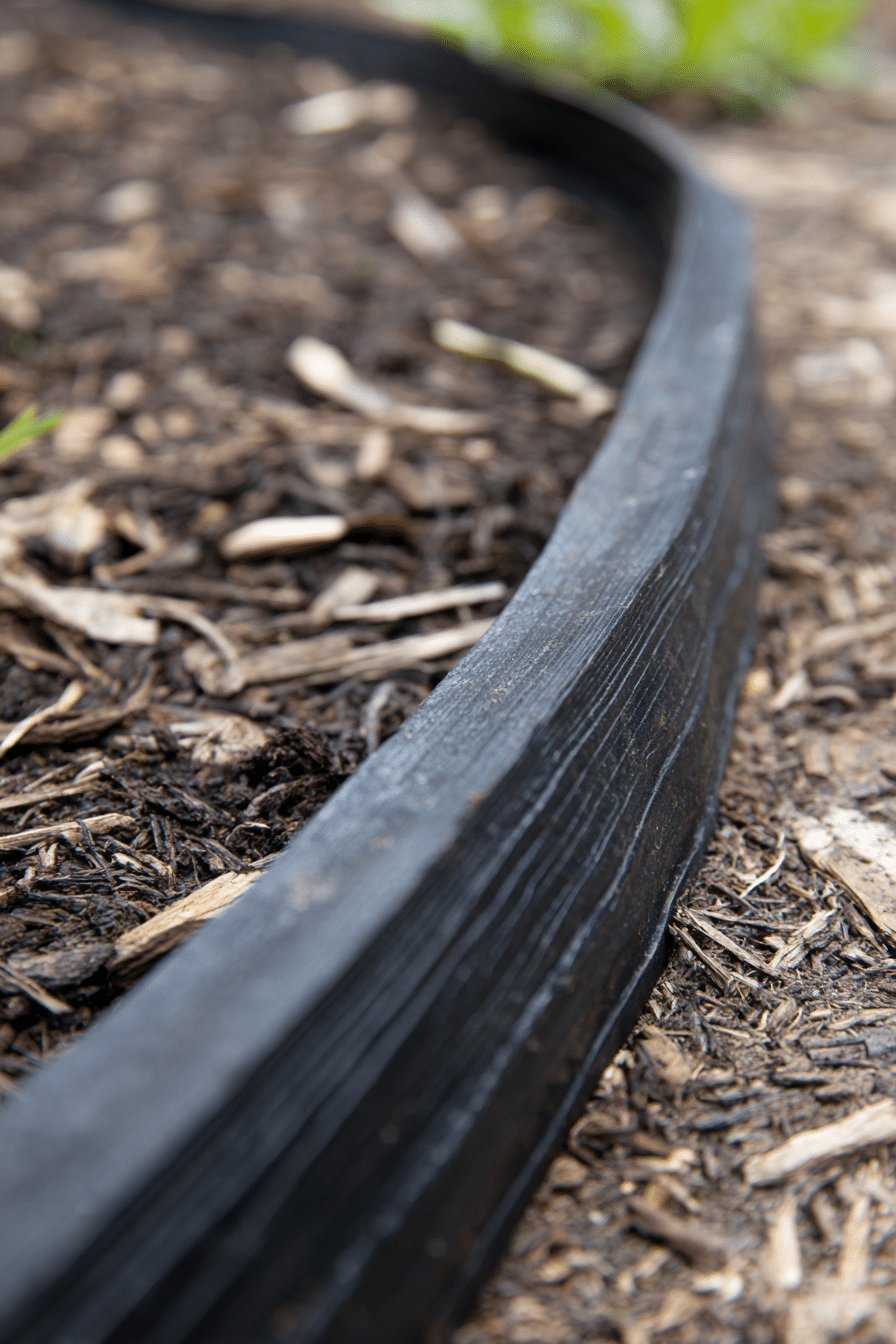
I love how this low-profile black garden border reads clean and a little chic. The dark color makes the mulch and greenery pop, and the gentle curve gives beds a soft, tidy shape without shouting for attention.
The subtle woodgrain texture keeps it from feeling too plasticky, so it reads warm and intentional even though it’s super practical.
It works especially well framing flower beds, lining a pathway, or wrapping raised veggie plots when you want structure without fuss.
II’d style it with spilling perennials like salvia and lavender, a ring of pale gravel to catch the eye, and a mix of terracotta pots or concrete stepping stones to play with warm and cool contrasts. Add a couple of low solar lights and a small rustic bench and you’ve got a neat, cozy corner that feels curated but totally low effort.
30) Rustic Terracotta & Moss
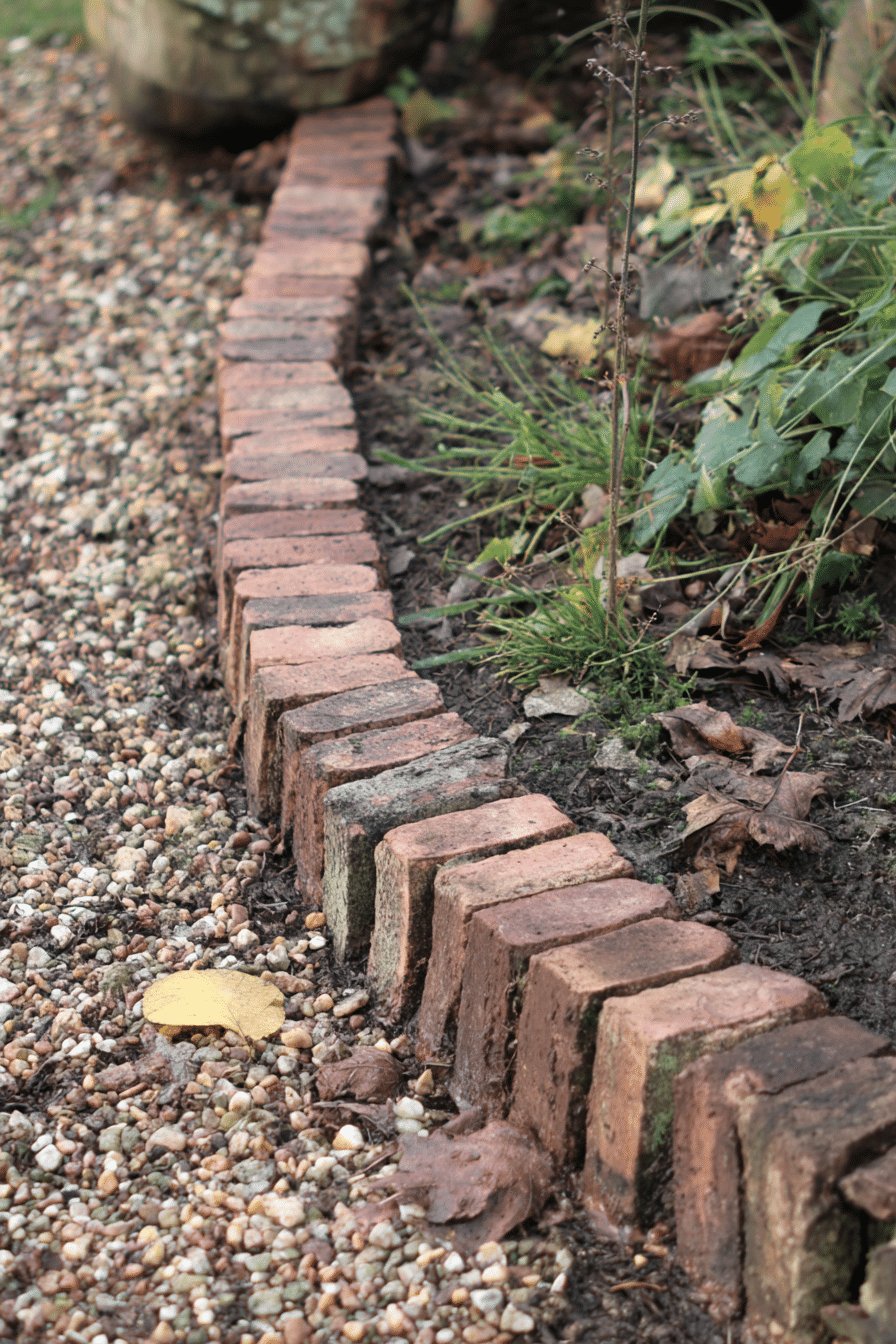
I love how these little upright bricks read as charming and deliberate without trying too hard.
Their worn terracotta tones and tight rhythm give the bed a defined edge that still feels relaxed, like a garden that’s lived in and loved.
The low profile is perfect for gravel paths, cottage beds, or a snug suburban border where you want structure but not formality. It especially sings with plants that spill over a touch, so the edge reads like a gentle punctuation rather than a hard stop.
To style it, let creeping thyme and sedum tumble over the bricks, add a few clumps of lavender or geraniums for color, and tuck in a terracotta pot or two to echo the brick tones. Moss in the joints, a soft gravel path, and a rustic bench or solar stake lights will keep the vibe cozy and effortless.
31) Rustic Weathered Terracotta Bricks
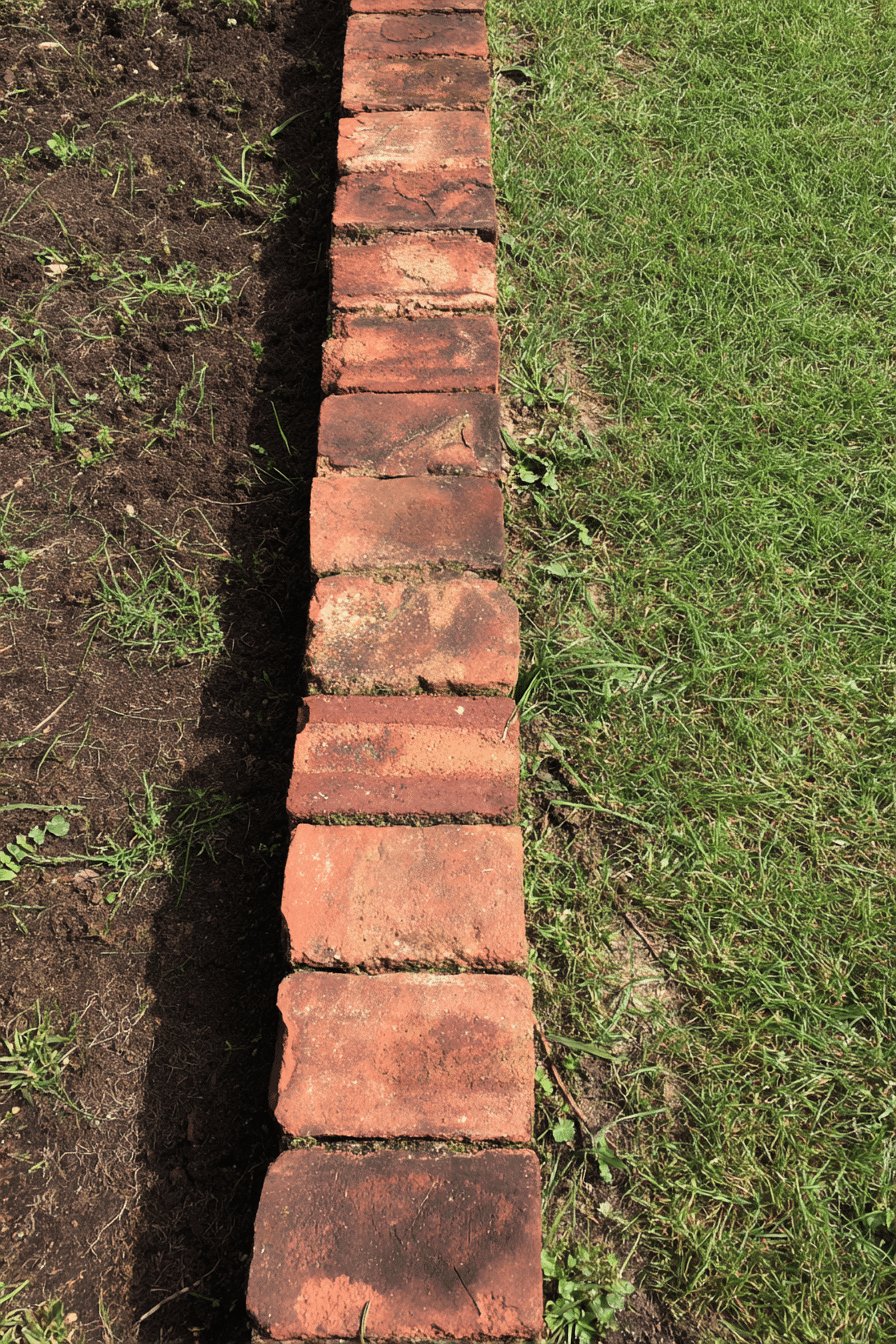
I love the worn, brick-red charm of this garden border. The slightly uneven, mossy gaps give it personality and make the edge feel relaxed rather than precious.
It frames beds in the best low-effort way, so your flowers or veggies look intentional without trying too hard. This style really shines in cottage, farmhouse, or informal gardens and along soft gravel paths where that lived-in warmth feels right.
Let low spillers tumble over the bricks — thyme, sedum, creeping rosemary, or sweet alyssum are my go-tos. Add a couple of terracotta pots, a reclaimed bench, and soft solar lights for cozy evenings. If you want it tidier, press the bricks level and plant moss-friendly groundcover in the joints so it keeps that charming, effortless vibe.
32) Playful Terracotta & Cream Mosaic
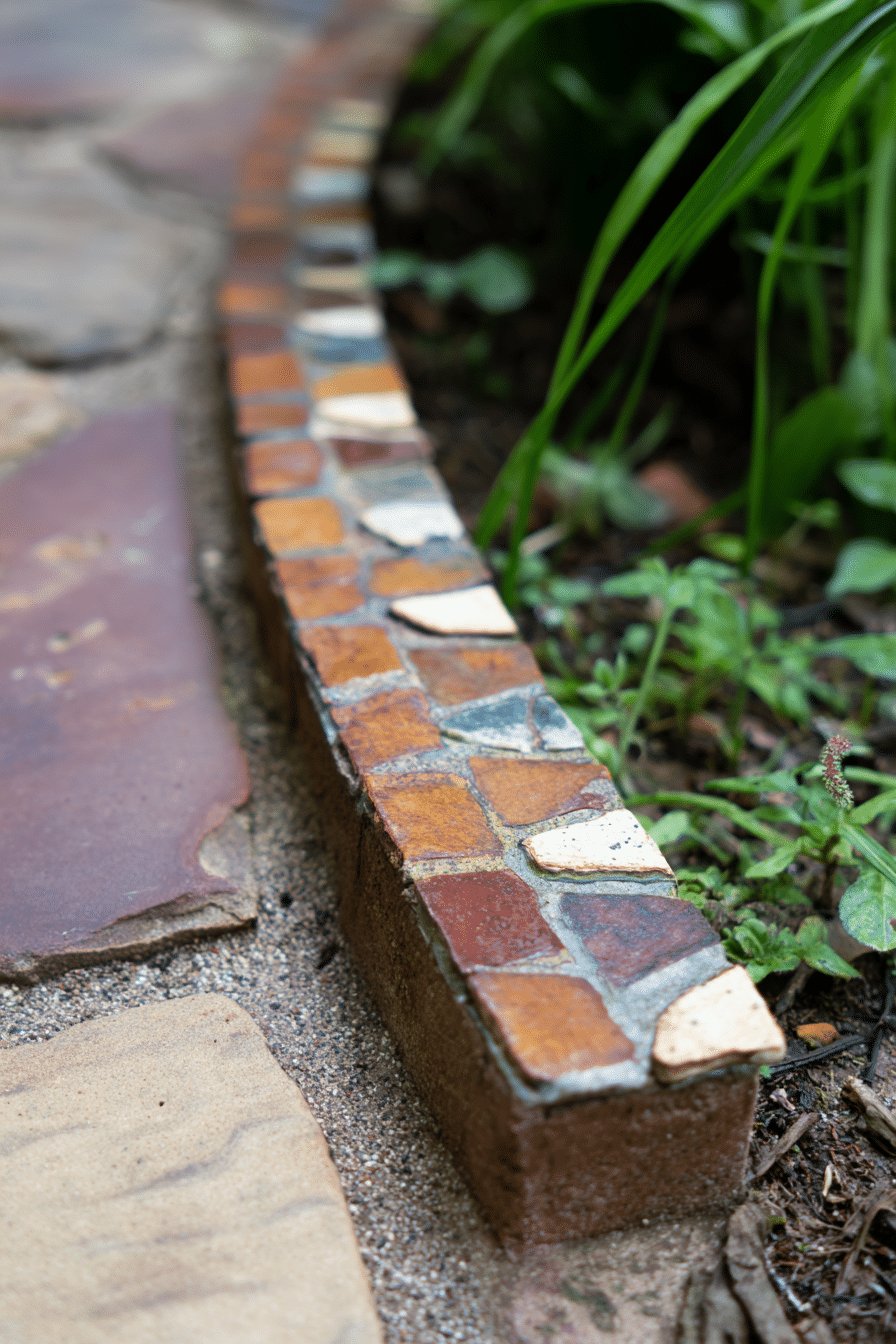
I love the way this mosaic-topped border feels like a little secret charm for the garden. The warm terracotta and cream chips give the edge a handcrafted, slightly boho vibe that still reads tidy, and the low profile keeps the focus on the plants rather than the hardscape.
It’s perfect for cottage beds, herb gardens, or any path that needs a bit of personality without going overboard.
The colors play nicely with stone paths and weathered wood, so the whole spot looks intentionally cozy rather than staged.
To style it, let perennials and trailing herbs spill over the edge, add a few low groundcovers like thyme or sedum for soft contrast, and place a cluster of terracotta pots or a vintage watering can nearby to echo the tones. Soft gravel paths, a rustic bench, and a couple of solar lanterns will keep the vibe relaxed and welcoming.
33) Brushed Steel Against Gravel
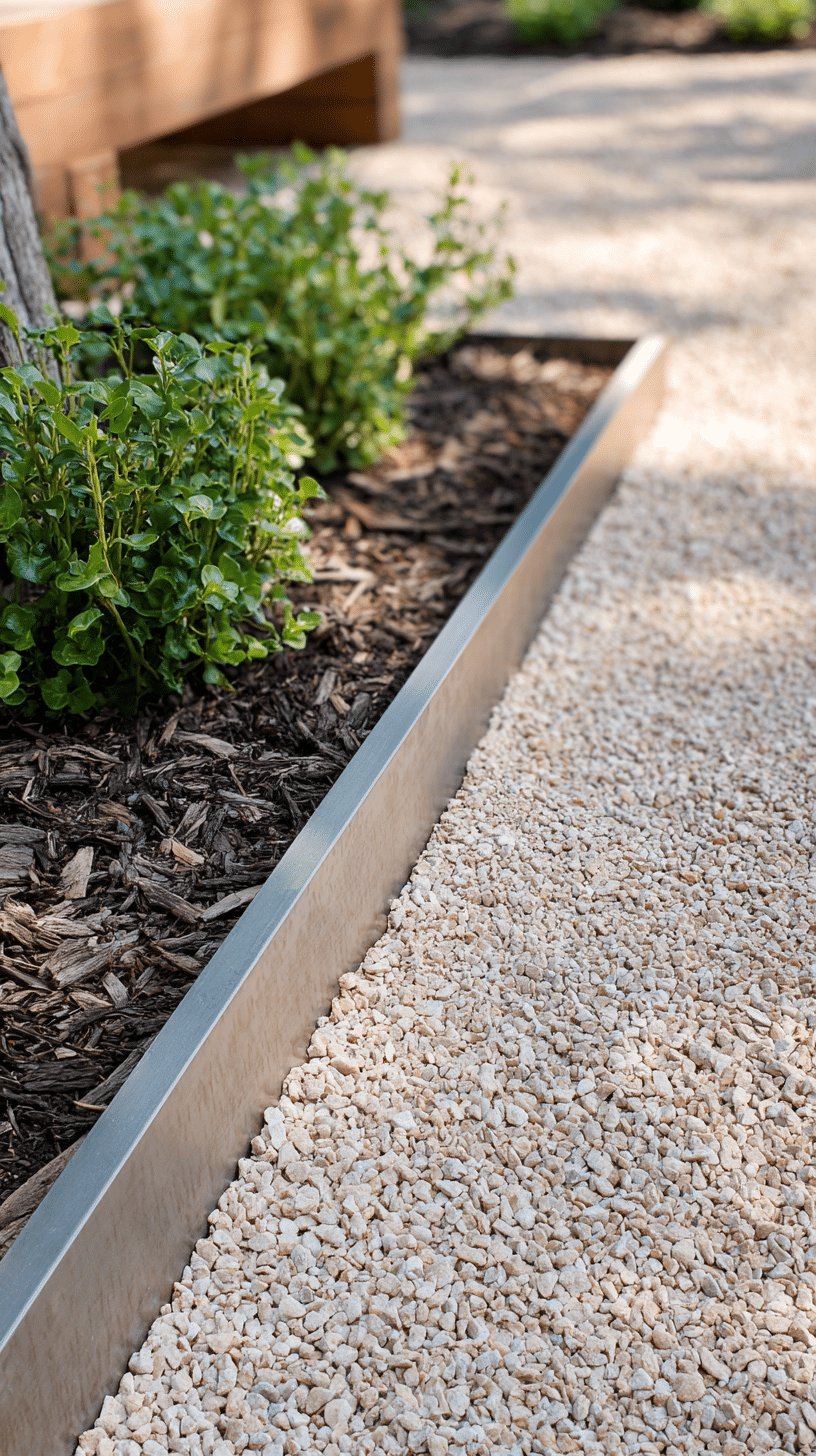
I love the way this steel garden border edging gives everything a super-clean, finished look without trying too hard. The thin, shiny line creates a crisp divide between the warm mulch and the pale gravel, so the path reads intentional and tidy.
It reflects a little light, stays low-profile, and quietly keeps stones and soil where they belong—big practical win, tiny aesthetic flex.
I’d pair it with low, spilling plants like dwarf boxwood, thyme, or sedums to soften the metal edge, and add a warm wood bench or terracotta pots for contrast. Toss in some low solar lights or a couple of stainless planters to echo the metal, and keep the gravel size consistent so the line stays crisp and calm.
34) Playful Scallop
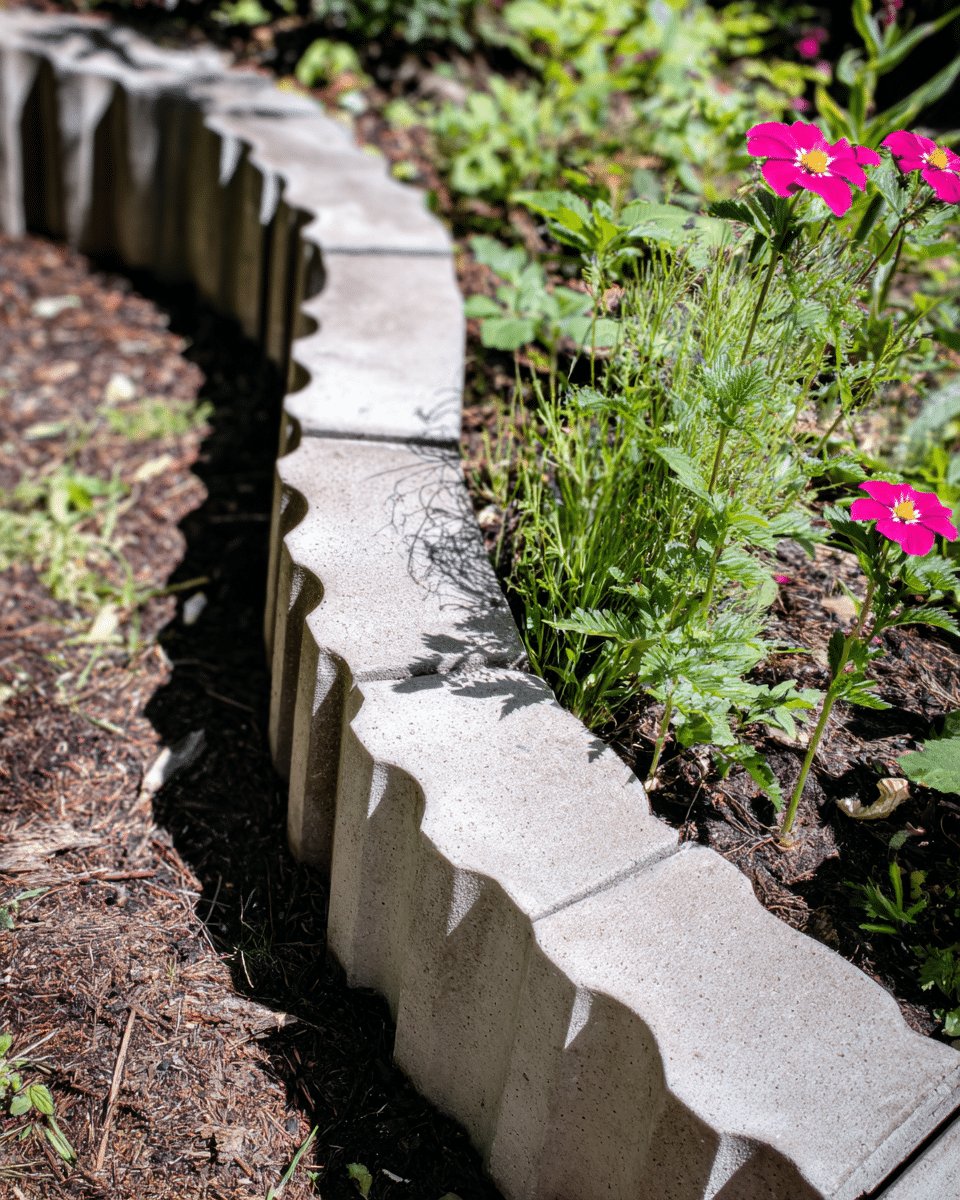
I love the scalloped concrete edge here. The soft, repeating curves give a surprisingly chic rhythm to the bed without trying too hard.
Its neutral grey keeps things calm so your plants can be the showstoppers, and the low height makes the whole border feel approachable and gardeny instead of formal. It works especially well for winding beds, cottagey borders, or anyone who likes tidy edges with a relaxed vibe.
For everything else, layer low spillers like thyme or trailing sedum to soften the scallops, add a mix of airy grasses for texture, and tuck in a couple of terracotta pots for warmth. A strip of mulch or fine gravel along the outer edge keeps mowing easy and makes the shape read clean. Trust me, it’s an easy win that feels finished but not fussy.
35) Vibrant Mosaic Tiles
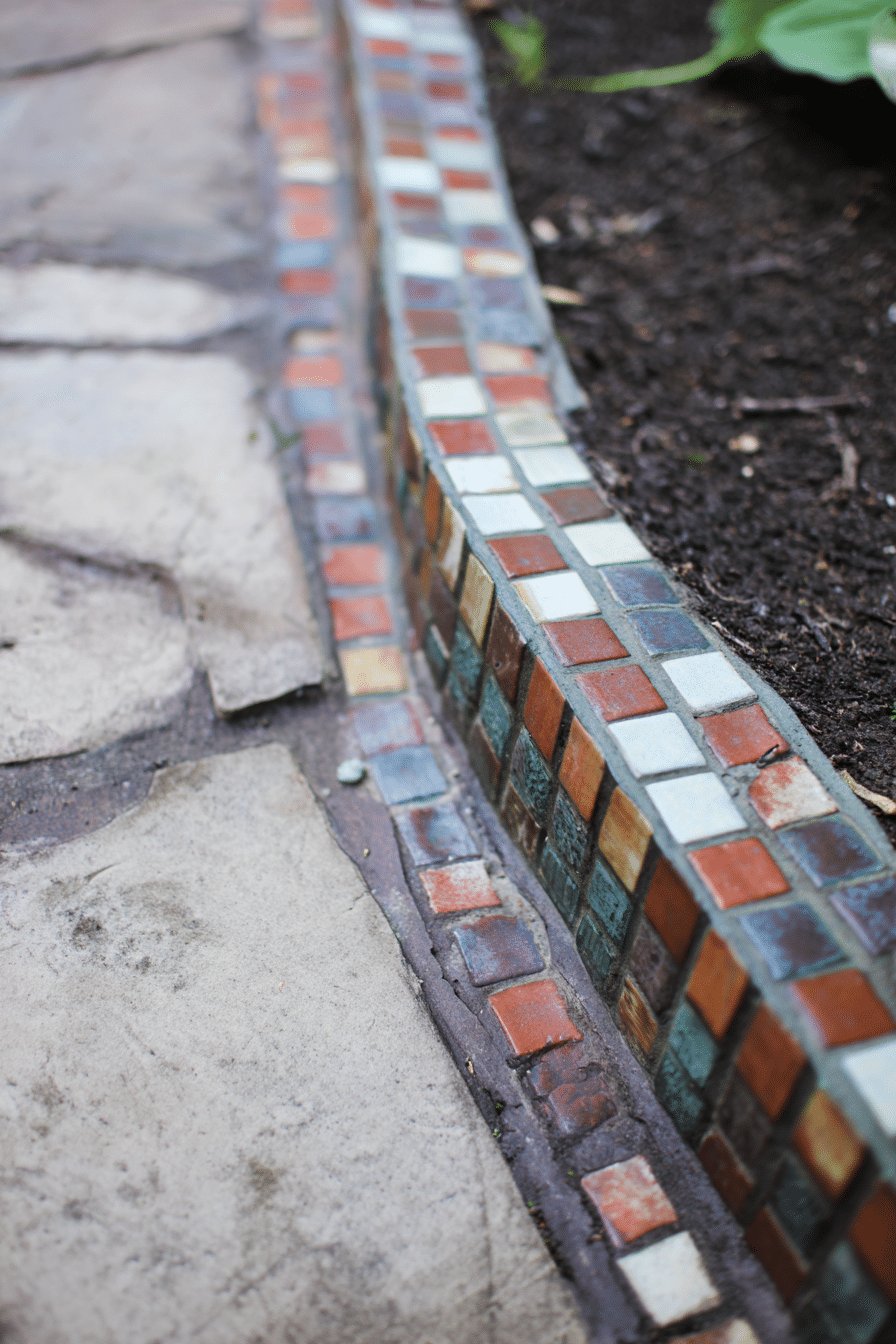
I love the little burst of personality this mosaic garden border brings. Those tiny square tiles in rust, teal, cream and patina feel handcrafted and a little cheeky, and they give a clean edge without looking precious.
It frames the bed like it’s wearing a fun belt, so the path reads as intentional and the planting looks curated rather than accidental. It’s especially charming in cottage, boho, or eclectic gardens and plays nicely with flagstone, terracotta pots, and any vintage metal accents.
To complement it, let plants spill gently over the edge—think lavender, thyme, low sedums, or soft ferns—and add low groundcover between pavers for a stitched-together look. Cluster a couple of terracotta pots or a weathered bench nearby and toss in warm string lights for evening vibes.
Keep the grout neutral if you want the tiles to pop, or match it to your path for a more subtle, cohesive feel.
36) Clean Curved Light Gray
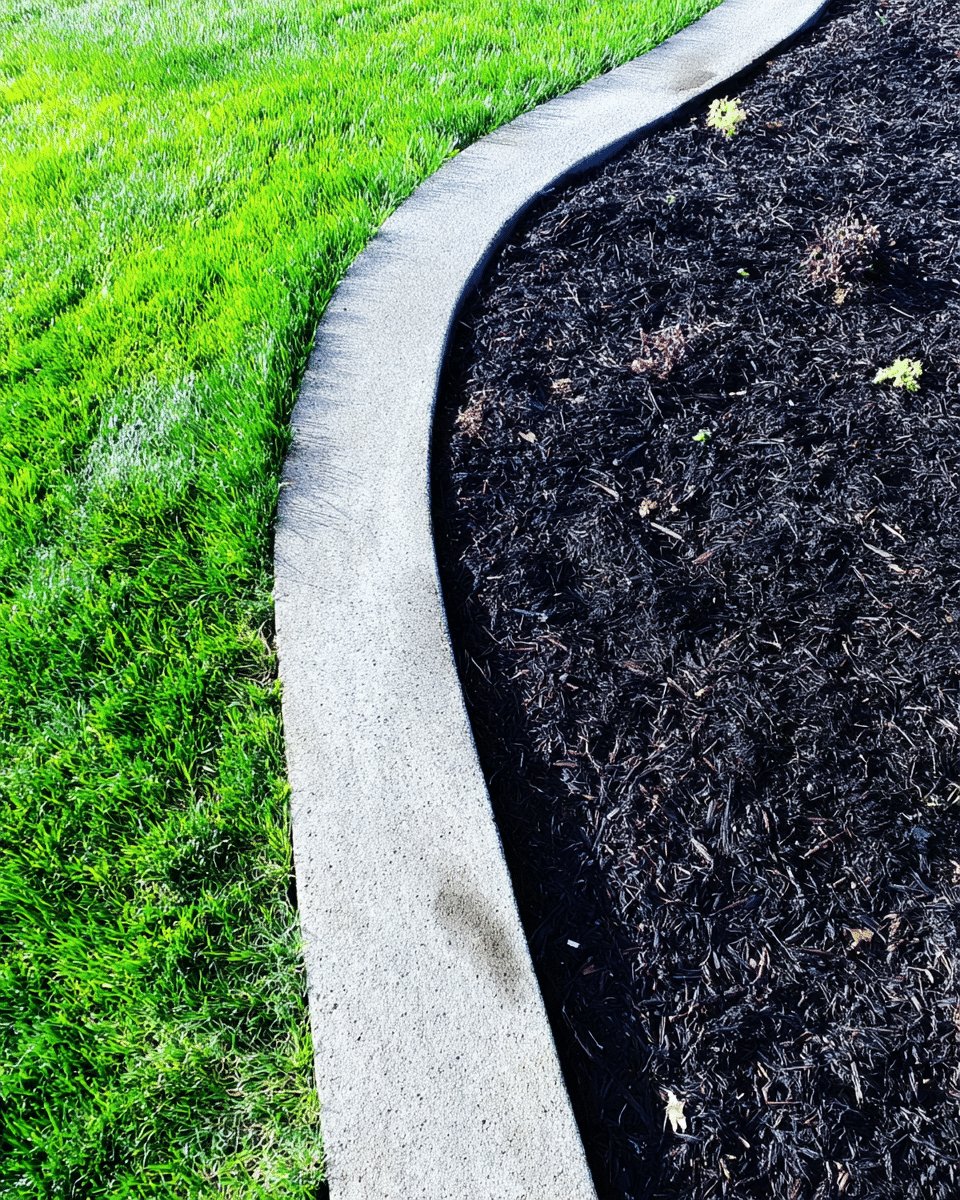
I love how this smooth concrete border makes everything feel purposely polished without trying too hard.
The soft curve adds instant movement and the pale grey pops against that dark mulch and neon green lawn, so the whole bed reads crisp and intentional. It feels like a no-fuss way to make a yard look tidy, keep mulch where it belongs, and give your mower a clean line to follow.
I’d soften the hard line with low spilling perennials like creeping phlox or sedum and tuck dwarf grasses or box-shaped shrubs along the inside for rhythm. Add a few terracotta pots or dark metal lanterns to echo the contrast, toss in solar path lights for evening glow, and keep the mulch fresh so the edge reads intentional not accidental.
Tips and Tricks for Garden Border Edging Ideas
You’ve seen my top garden border edging ideas, but here are some tips and tricks you’ll want to follow to achieve these looks:
- Pick the right material: I match the edging material to the look I want and the job it must do. Brick and stone feel classic and hold up well. Steel gives a crisp line and lasts if I treat rust as a feature. Pressure-treated wood looks warm but needs replacing sooner. Plastic works for curves and tight budgets. I test a scrap piece in place before I commit.
- Mind height and scale: I size the edge to the plants and lawn mower. Low edges of 2 to 4 inches work for neat beds. Taller edges suit raised beds or to keep gravel in place. I step back and check proportion against nearby plants and paths before digging.
- Create gentle curves: I ditch rigid straight lines unless the space calls for them. Curves slow the eye and make beds feel bigger. I lay a hose or string to map a curve, then follow that guide when cutting the trench or positioning pavers.
- Install a buried lip for clean lines: I cut a narrow trench, sink the edging so one side sits below grade and the other shows, then pack soil tight against it. That buried lip keeps grass from creeping in and stops mulch from spilling out.
- Use contrast to make borders pop: I pair dark mulch or gravel against pale stone, or put bright plants against rusty steel. Contrast makes the border read like intentional design and helps define the bed from the lawn.
- Plan for maintenance access: I add removable pavers or a break in continuous edging where I need to wheelbarrow or reach deep into the bed. That small gap saves me from lifting heavy edging when I prune or add soil.
- Add a mowing strip: I create a narrow, firm strip of pavers or compacted gravel next to the lawn edge. I mow right up to it for a tidy edge and avoid scalping plant roots. It saves time on upkeep.
- Light it and soften it: I tuck low solar lights or spot LEDs along the border and plant low, soft-edge species to soften hard lines. Night lighting shows the edge and gives the whole bed a finished look.